


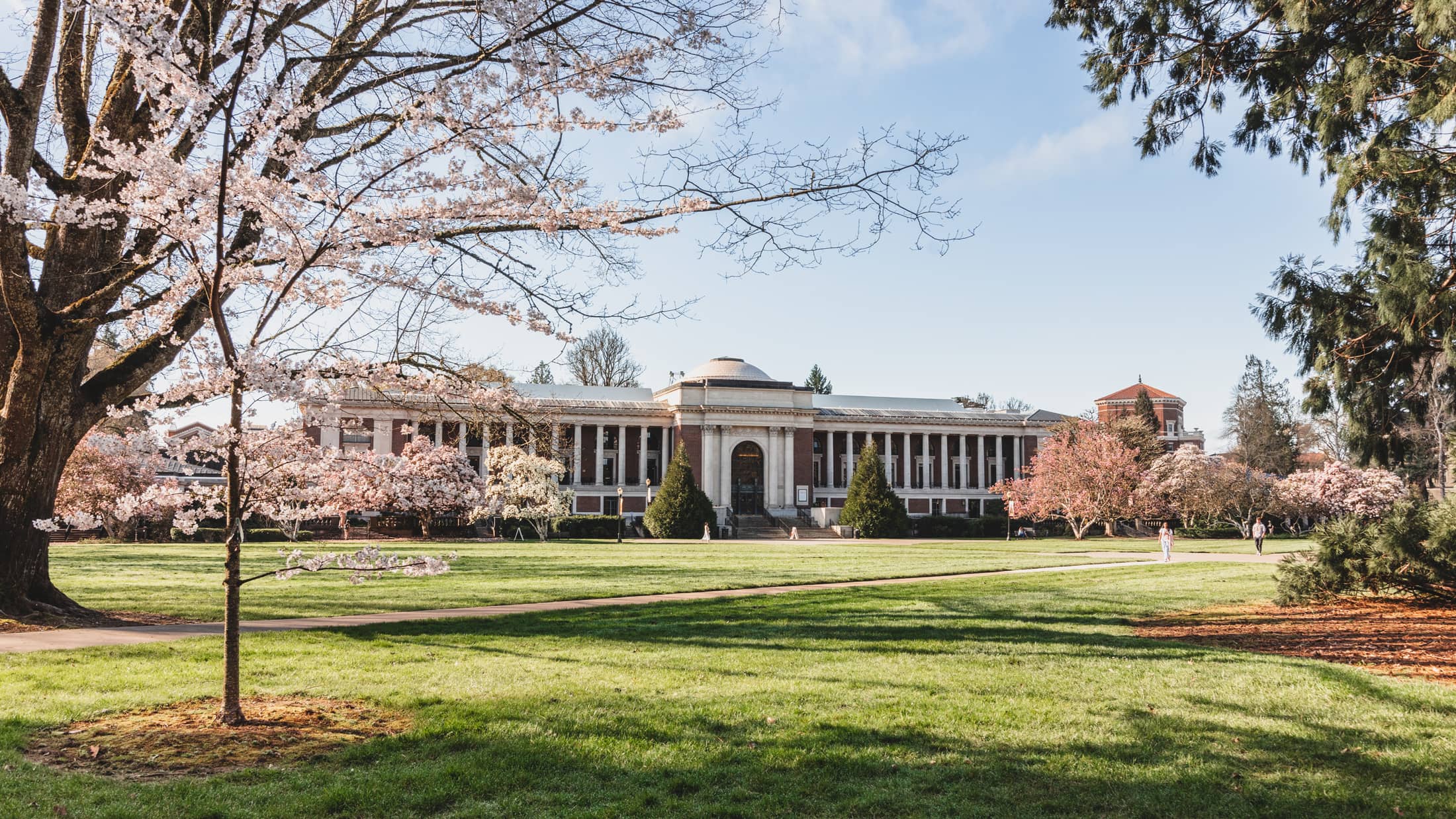
Oregon State University, LANDSCAPE PLANTS, Vol. 2
skip page navigationOregon State University    Department of Horticulture
Landscape Plants
Images, Identification, and Information
Volume 2  Copyright ©, Oregon State University, 1999-2008 

This is Volume 2 of Oregon State University's Landscape Plants web site.   Landscape plants (mostly woody, i.e., shrubs and trees) in this volume are listed in alphabetical order by genus, from F (Fagus) through O (Oxydendrum).  From the list below select a letter which corresponds to the first letter of the genus you wish to view or, if listed, the genus itself (or search the Common Name List).
First letter of genus (or a Genus itself)
Volume 1 A  Abies  Acer  Aesculus  Alnus  Amelanchier  Arbutus  Arctostaphylos  Aucuba
  B  Berberis  Betula  Buddleia  Buxus
  C  Calocedrus  Camellia  Carpinus  Castanea  Ceanothus  Cedrus  Cercis
  Chaenomeles  Chamaecyparis  Chionanthus  Cistus  Clematis  Cornus
  Corylus  Cotoneaster  Crataegus  Cupressus  Cytisus
  D  Daphne  E  Elaeagnus  Escallonia  Eucalyptus  Euonymus
 Volume 2
current
  F  Forsythia  Fraxinus  G  H  Hamamelis  Hebe  I  Ilex  J  Juglans  Juniperus
  K  Kerria  Koelreuteria  L  Larix  Ligustrum  Liquidambar  Liriodendron  Lonicera
  M  Magnolia  Mahonia  Malus  Myrica
  N  Nyssa  O  Osmanthus
 Volume 3
P  Parthenocissus  Photinia  Picea  Pinus  Populus  Prunus  Pseudotsuga  Pyrus
  Q  R  Rhododendron  Rhus  Ribes  Rosa  Rubus
  S  Sambucus  Sequoia  Sorbus  Spiraea  Stewartia  Syringa   T  Taxus  Thuja  Tilia  Tsuga
  U  Ulmus  V  Viburnum  W  Y  Z  Zelkova
For a limited number of herbaceous annuals or perennials see:
 Volume 4  Herbaceous Ornamental Plants

Some additional items:
Fagus       Fagaceae
Beech       FA-gus
A genus of about 10 species of monoecious (male and female flowers borne on the same plant), deciduous trees with smooth bark and slender shoots.  Leaves are simple, alternate, 2-ranked, entire to dentate.  Flowers are small.  Fruit a stiff hairy capsule which splits into 4 sections to release 2, rarely 3, glossy tan-brown nuts.  Native northern temperate regions.  Only one species, F. sylvania, is widely grown outside of its native range.
Fagus: the Greek and Latin name for these trees.
  • Fagus grandifolia      [American Beech]      Common Name List
          (plant habit)  (leaves)  (leaves, comparison)  (leaf and margin (May), comparison)
          (male and female flowers)  (leaves and fruit)  (leaves and fruit)  (leaves, fall)
          (winter buds, comparison)  (trunk, bark)  (info)
  • Fagus sylvatica      [European Beech]      Common Name List
          (plant habit)  (leaves)  (leaves, comparison)  (leaf and margin, comparison)
          (male and female flowers)  (leaves, fruit and buds)  (leafy twig and fruit)  (branches, fall)
          (leaves, fall)  (plant habit (winter), trunk, bark)  (winter buds, comparison)  (info)

       Several selections of Fagus sylvatica:
      Fallopia japonica  [Japanese Knotweed, Mexican Bamboo]   see  Polygonum cuspidatum
    × Fatshedera       Araliaceae
    Fatshedera       fatz-HED-er-a
    A single intergeneric hybrid, the result of a cross between Fatsia japonica (Japanese Fatsia) and Hedera helix (English Ivy). (see below).
    Fatshedera: name derived from the two genera from which it was developed, namely Fatsia and Hedera.
  • × Fatshedera lizei      [Fatshedera]       Common Name List
          (plant habit)  (leaves)  (flower clusters)  (info)

  • Fatsia       Araliaceae
    Fatsia       FAT-see-a
    A genus of 3 species of evergreen shrubs or small trees with foliage crowed at the branch tips.  Leaves very large, leathery, palmately 7-11 lobes.  Flowers in terminal clusters, in umbels, some unisexual, 5 petals.  Native to eastern Asia, especially Japan, Taiwan.
    Fatsia: an adaptation of the Japanese name fatsi, for F. japonica.
  • Fatsia japonica      [Japanese Fatsia]     Common Name List
          (plant habit)  (leaves)  (leaf)  (leaves and flower cluster)  (flowers)  (info)

  • Feijoa       Myrtaceae
    Feijoa       fe-HO-a
    Two species of evergreen shrubs.  Leaves opposite.  Flowers solitary in leaf axils, 4 petals, many stamens.  Fruit an oblong berry, remnants of the calyx on the tip.
    Feijoa: after Don da Silva Feijoa, 19th-century Brazilian botanist..
  • Feijoa sellowiana    (syn. Acca sellowiana)     [Pineapple Guava, Feijoa]      Common Name List
          (plant habit)  (leaves)  (leaves, flower buds and flower)  (stem, bark)  (info)

  • Firmiana       Sterculiaceae
          fir-me-AH-na
    A genus of 9 species of shrubs and trees.  Leaves simple, alternate, margins entire or lobed, long petiole.  Flowers unisexual, 5-parted, in terminal or axillary clusters (panicles or racemes), calyx yellow, petals absent.  Fruit leaflike, leathery, dehiscing before mature, seed globose.  Native to east Asia and one species in east Africa.
    Firmiana: after Karl von Firmian, governor of Lombardy region of Italy and supporter of the botanic garden of Padua.
  • Firmiana simplex      [Chinese Parasol Tree]     Common Name List
          (expanding leaves, spring)  (plant habit, early summer and fall)  (leaves)
          (leaf)  (fruit)  (leaf, fall)  (trunk, bark)  (twig, bud, winter)  (info)
    Forsythia       Oleaceae
    Forsythia       for-SITH-ee-a
    About 6 species of deciduous shrubs, its branches are gold-green, have chambered pith or hollow, and covered with lenticels.  Leaves opposite, usually simple, serrate or entire.  Flowers are yellow and appear before leaves, corolla deeply divided into 4 parts, united as a short tube.  Native to central Europe and eastern Asia.
    Forsythia: after William Forsyth (1737-1804), Scottish gardener and writer, he became the superintendent of Royal Gardens, Kensington, Palace.
  • Forsythia × intermedia      [Border Forsythia]      Common Name List
          (plant habit, early spring flowering)  (older plant habit, flowering)  (flowering branches)
          (flowers)  (plant habit, winter, spring, and summer)  (leafy shoot)  (leaves)
          (plant habit, fall)  (leaves, fall)  (young stem)  (info)

  • Forsythia viridissima 'Bronxensis'    [Bronxensis Greenstem Forsythia]   Common Name List
          (plant habit, flowering)  (flowers)  (info)

  • Fothergilla       Hamamelidaceae
    Fothergilla, Witch Alder       foth-er-GIL-a
    A genus of two deciduous shrub species (F. gardenii and F. major) that are native to southeastern U.S.  Most noticeable in spring when their bottle brush-spike flower heads appear before the leaves.

           The two species are similar but Fothergilla major, relative to F gardenii, grows to a larger size, its flower spikes tend to be larger, its leaves are about 50 percent larger, and the toothing on the leaf margin near the tip is more pronounced.  In addition, F. major does not sucker, whereas F. gardenii is moderately suckering and can in time form small spreading colonies (Paul Cappiello, Bernheim Arboretum, Clermont, Kentucky).

    Fothergilla: after John Fothergill (1712-80), English physician and gardener with an interest in growing American plants.
  • Fothergilla gardenii      [Dwarf Fothergilla]      Common Name List
          (plant habit, spring)  (flowers, spring)  (plant habit, summer)  (leaves)  (plant habit, fall)
          (plant habit, fall (again))  (leaves, fall)  (info)


  •    A selection of Fothergilla gardenii:
  • Fothergilla major      [Large Fothergilla]     Common Name List
          (plant habit, flowering)  (plant habit, flowering)  (flowering branches)  (flowers)
          (flower head and expanding leaf)  (info)

  • Fouquieria       Fouquieriaceae
          fo-KAIR-e-a
    Some 11 species of succulent spiny shrubs to trees.  Leaves simple, alternate, blades deciduous, petioles becoming spines, also with secondary leaves.  Flowers showy, red, purple to creamy yellow or white, tubular or campanulate.  Fruit a capsule, about 2.5 cm long.  Native to Mexico and adjacent U.S. states; Texas, New Mexico, Arizona, and California.
    Fouquieria: after P. E. Fouquier (1776-1850), a French physician and medical consultant.
  • Fouquieria splendens    [Ocotillo]      Common Name List
          (plant habit)  (stem (emerging leaves) and flower cluster)  (info)
    Fragaria       Rosaceae
    Strawberry       fra-GARE-ree-a
    About 12 species of highly stoloniferous perennial plants.  Leaves alternate, compound, 3 leaflets.  Flowers white, 5-8 petals, 10-30 stamens, 10-80 carpels.  Fruit many small, glabrous with achenes on the surface of an enlarged, fleshy receptacle.  Native to the northern temperate zones and Chile.
    Fragaria: from the Latin fragrans, fragrant, alluding to the aroma of the fruit.
  • Fragaria chiloensis    [Sand, Beach or Chilean Strawberry]  Native List   Common Name List
          (plant habit)  (plant habit)  (leaves, flowers and stolons)  (info)

  • Franklinia       Theaceae   (Camellia Family)
          frank-LIN-ee-a
    Most authorities (e.g., Krüssmann, G. 1976; Griffiths, 1994) describe Franklinia as a monotypic genus only containing Franklinia alatamaha (see below).  The New RHS Dictionary of Gardening (Huxley, A., 1992), describes the genus as containing about 70 species of deciduous or evergreen shrubs or small trees native to southeast Asia and, at one time, southeastern North America.
    Franklinia: after Benjamin Franklin (1706-90).
  • Franklinia alatamaha      [Franklin Tree]      Common Name List
          (plant habit, summer)  (plant habit, again)  (leaves and flower buds)  (leaves and flowers, Sept.)
          (flower)  (plant habit, flower and leaves, late fall)  (winter twig and buds)  (info)

  • Fraxinus       Oleaceae  (Olive Family)
    Ash       FRAKS-i-nus
    A genus of some 65 species of shrubs and trees, mostly deciduous and native to temperate regions.  Leaves are opposite and compound (pinnate).  Flowers are small, bisexual or unisexual, not ornamental, and appear before the leaves.  Fruit is a 1-seeded samara ("key") with a flattened, thin wing (reminiscent of a canoe paddle).  Females of some species bear numerous large clusters of fruit, sometimes considered unattractive and messy.  Native to temperate North America, Europe, and Asia, with a few found in the tropics.
    Fraxinus: the Latin name for the ash.
    Caution:  Fraxinus species native to North America are threatened by the emerald ash borer (Agrilus planipennis) an Asian insect first discovered in Detroit, Michigan in 2002.  It has since spread to other parts of Michigan and Windsor, Ontario, Canada and several locations in Indiana and Ohio.
  • Fraxinus americana     [White Ash]     Common Name List
          (plant habit, summer)  (leaves)  (leaf)  (leaflet)  (plant habit, early fall)
          (plant habit, fall)  (leaf, fall)  (trunk, bark)  (dormant twig)  (info)


  •   A popular cultivar of Fraxinus americana:
       Fraxinus angustifolia ‘Raywood’   see  Fraxinus oxycarpa ‘Raywood’
  • Fraxinus excelsior Golden Desert ®     [Golden Desert Ash]      Common Name List
          (plant habit, summer)  (plant habit, fall)  (leaves, fall)   (leaf, fall)
           (winter, plant habit, bark and buds)  (info)

  • Fraxinus latifolia   [Oregon Ash]   Native List  Common Name List
          (male flowers, spring)  (female flowers, spring)  (expanding leaf)  (developing fruit, spring)
          (plant habit)  (plant habit, woods and landscape)  (leaf)  (leaves and fruit)  (leaflets and twig)
          (shoots, fall)  (leaf, fall)  (trunk, bark)  (twigs, bark, winter)  (info)

  • Fraxinus ornus       [Flowering Ash]      Common Name List
          (plant habit, flowering (spring) and fall)  (leaves and flower clusters)
          (flower cluster and leaves)  (flowers)  (leaves and fruit)  (leaves and fruit)
          (plant habit, fall)  (leaves, fall)  (trunk, bark)  (twig, buds, winter)  (info)

  • Fraxinus oxycarpa ‘Raywood’       [Raywood Ash, Claret Ash]      Common Name List
          (row of trees)  (plant habit)  (canopy, open)  (leaves)  (leafy shoot)
          (fruit clusters)  (plant habit, fall)  (foliage and leaf, fall)  (leaves, fall)
          (trunk, bark)  (opening male flower buds, early spring)  (info)
  • Fraxinus pennsylvanica       [Green Ash]      Common Name List
          (male flowers, spring)  (plant habit, summer)  (leaf)  (leaves)  (leaflets and twig)
          (fruit (seed) clusters and fruit)  (plant habit, early fall)  (leaflets, fall)  (trunk, bark)
          (twigs and buds, fall and winter)  (buds, winter)  (info)


  •   Two selections of Fraxinus pennsylvanica:
      Comparison of two popular Ash cultivars:
                      Fraxinus americana Autumn Purple® and Fraxinus pennsylvanica ‘Marshall’

                      (leaves, summer)  (leaflets, summer)  (leaflets, underside and margin)  (trees, fall)  (leaves, fall)
  • Fraxinus quadrangulata       [Blue Ash]     Common Name List
          (plant habit)  (leaf)  (leaf)  (leaflet, underside)  (trunk, bark)  (winter twigs, buds, stems)
          (info)
  • Fraxinus sieboldiana       [Siebold Ash]     Common Name List
          (plant habit)  (leaves)  (flower clusters and leaves)  (flower clusters)  (info)
    Fremontodendron       Sterculiaceae
    Flannel Bush, Fremontia       free-mont-o-DEN-dron
    Two, or possibly three, species (F. californicum, F. mexicanum, and possibly F. decumbens) of more or less broad-leaved evergreen shrubs and trees.  Leaves alternate, unlobed or palmately 3-, 5-, or 7-lobed.  Flowers solitary, showy, calyx petaloid, 5-lobed, 3 bract at the base of the calyx, petals absent.  Native to Arizona, California and Mexico.
    Fremontodendron: after Major-General John C. Fremont, American explorer and plant collector in the western U.S.
  • Fremontodendron ssp.       [Flannel Bush]     Common Name List
          (plant habit, flowering)  (plant habit, flowering)  (flowering shoots)  (leaves and flower)
          (flower)  (trunk, bark)  (info)

  • Fuchsia       Onagraceae
    Fuchsia, Lady's Eardrops       FU-shah, fu-SHI-a, fu-K-si-a
    A genus of over 100 species of erect, procumbent, climbing shrubs, as well as epiphytes and small to medium trees.  Underground parts are sometimes tuberous or with swollen stems.  Leaves alternate, opposite or in whorls.  Flowers are mono or bisexual, on slender pedicels (stalks), often pendulous, perianth (calyx + corolla) tubular with a nectary at the base, 4 sepals spreading to recurved, 4 petals or absent, rolled together or spreading, 8 stamens in 2 unequal ranks.  Native to Central and South America, including Mexico and Tierra del Fuego, and New Zealand and Tahiti.  Most fuchsia cultivars are he result of breeding between many different species.
    Fuchsia: after Leonhart Fuchs, (1501-1566), German physician and herbalist.
  • Fuchsia magellanica       [Magellan Fuchsia, Hardy Fuchsia]      Common Name List
          (plant habit, summer)  (flowering branches)  (leaves)  (flowers)  (info)
    Garden Art  (courtesy of Associated Plumbers)
    Garrya       Garryaceae
    Silktassel, Tasseltree       GAR-i-a
    About 18 species of evergreen trees or shrubs, dioecious, branches usually ascending, 4-sided at first, pubescent when young.  Leaves opposite, simple, leathery, entire, short petiole.  Small flowers in pendulous female and male catkins.  Fruit is a round, leathery, dry, 2-seeded berry.
    Garrya: after Nicholas Garry (d. 1830) of the Hudson Bay Company, who helped David Douglas on this plant collecting trips to the Pacific Northwest.
  • Garrya elliptica    [Wavyleaf Silktassel, Coast Silktassel]  Native List  Common Name List
          (plant habit, flowering)  (male catkins and leaves)  (plant habit, after flowering)
          (leaves)  (leaves)  (leaves, comparison)  (info)
  • Garrya flavescens   [Yellowleaf Silktassel, Ash Silktassel]    Common Name List
          (plant habit)  (leaves)  (info)

  • Garrya fremontii    [Fremont Silktassel]  Native List  Common Name List
          (leaves and catkins, winter)  (shoots, leaves, catkins, early spring)  (plant habit and catkins)
          (branches)  (leafy shoot)  (leaves, comparison)  (plant habit, fruiting, and fruit cluster)
          (plant habit, fruiting, and ripe fruit cluster);  (info)
    Gaultheria       Ericaceae
          gawl-THEE-ree-a
    Some 170 species of evergreen, sometimes deciduous, shrubs, often spreading by underground stems.  Leaves simple, alternate, with a short petiole.  Flowers white, urn-shaped, usually appear in late spring or early summer.  Fruit is a capsule, often enclosed by a fleshy colored calyx.  Native to North and South America, West Indies, and Japan to Australia.
    Gaultheria: after Jean-François Gaulthier (1708-1758), botanist and physician of Quebec.
  • Gaultheria miqueliana      [Miquel's Spicywintergreen]   Common Name List
          (plant habit, summer flowering)  (plant habit, summer flowering)  (leaves and fruit)  (fruit cluster)  (info)

  • Gaultheria mucronata    (syn. Pernettya mucronata)   [Chilean Pernettya]   Common Name List
          (plant habit)  (flowers)  (fruit and leaves)  (info)


  •   A cultivar of Gaultheria mucronata:
  • Gaultheria procumbens       [Wintergreen]      Common Name List
          (plant habit)  (leaves)  (flowers and leaves)  (leaves and fruit, fall)  (fruit and leaves)  (info)

  • Gaultheria shallon    [Salal]  Native List  Common Name List
          (plant habit, spring)  (plant habit, late spring flowering)  (flowers)
          (leaves)  (plant habit, summer)  (shoot)  (ripening fruit)  (info)

  • Gaultheria tetramera         
          (plant habit, fruiting)  (leaves and fruit)  (leaves)  (fruit cluster)  (info)

  • Genista        Fabaceae, Leguminosae
    Broom, Woadwaxin       je-NIS-ta
    About 90 species of shrubs, often prostrate, and small trees, mostly deciduous, but may appear evergreen because of green, flattened branchlets.  Leaves simple to trifoliate, sometimes absent.  Flowers usually yellow and the fruit an elliptic, flat capsule, with 2 chambers, containing small winged seeds.  Native to Europe, Mediterranean to western Asia.
    Genista: classical Latin name for broom, used by Virgil.
  • Genista lydia       [Lydia Broom]      Common Name List
          (plant habit, flowering)  (flowering shoots)  (emerging shoots)  (info)
  • Genista pilosa       [Silkyleaf Woadwaxen, Silkyleaf Broom]     Common Name List
          (plant habit, flowering)  (flowers and leaves)  (plant habit, summer)  (leaves)
          (fruit and leaves)  (info)

  • Ginkgo       Ginkgoaceae
    Ginkgo       GINK-go
    A single species, a deciduous tree (Ginkgo biloba).  Based on fossil evidence, this species has existed almost unchanged for over 200 million years.  Native to China, and currently found wild in two locations.
    Ginkgo: from the Chinese yin-kuo, silver apricot, apparently from the Japanese pronunciation, ginko.
  • Ginkgo biloba      [Ginkgo, Maidenhair Tree]      Common Name List
          (plant habit)  (plant habit, open)  (emerging leaves)  (leafy shoot)  (leaf)  (leaves and fruit)
          (plant habit, fall)  (leaves and fruit, fall)  (trunk, bark)  (winter twigs, buds)  (info)

  • Gleditsia       Fabaceae, Leguminosae
    Honeylocust       gle-DITS-ee-a
    About 14 species of deciduous trees, usually with simple or branched thorns on the branches and trunks.  Leaves alternate, compound (pinnate or bipinnate), with as many as 30 leaflets.  Flowers small, green-white, perfect of unisexual, in axillary clusters (racemes).  Fruit oblong, flat to nearly cylindrical, with many rounded seeds.  Native to eastern Asia, North and South America, tropical Africa, and Iran.
    Gleditsia: after German botanist Gottlieb Gleditsch (1714-1786), director of the Berlin Botanical Garden and friend of Linnaeus.
  • Gleditsia macracantha            
          (plant habit)  (leaves)  (trunk, bark, thorns)  (info)
  • Gleditsia triacanthos var. inermis       [Thornless Honeylocust]      Common Name List
          (plant habit)  (leaves)  (leaves, "portrait")  (developing fruit and leaf)  (leaves and fruit, summer)
          (leaf, compared with Albizia julibrissin)  (leaf, compared with Robinia pseudoacacia)
          (plant habit, fall)  (plant habit, fall)  (leaves and fruit, fall)  (trunk, bark)  (twig, buds)  (info)

  • Grevillea       Proteaceae
    Spider Flower       gre-VIL-le-a
    Some 250 species of evergreen shrubs and trees.  Leaves alternate, often toothed or lobed.  Flower clusters terminal, flowers paired, tubular, subtended by a bract; often rich in nectar.  Hardiness varies, but generally rather tender, some tolerate frost.  A large number of hybrids and other garden forms (see the Sunset Western Garden Book for those available in California and southwestern U.S.).  Native to Australia.
    Grevillea: After Charles F. Greville (1749-1809), co-founder of the Royal Horticultural Society and once vice-president of the Royal Society of London.
  • Grevillea lanigera      [Woolly Grevillea]     Common Name List
          (info)


  •   A cultivar of Grevillea lanigera:
  • Grevillea rosmarinifolia      [Rosemary Grevillea]     Common Name List
          (plant habit, flowering)  (flower clusters and leaves)  (flower cluster and leaves)  (info)

  • Grevillea victoriae      [Royal Grevillea]     Common Name List
          (plant habit)  (leafy shoots)  (leaf)  (flower cluster, opening)
          (flower cluster)  (info)

  • Gymnocladus       Fabaceae, Leguminosae
           jim-NOK-ladus
    Five species of deciduous trees with thick, knotty, branches.  Leaves alternate, large, compound (bipinnate), leaflets ovate and thin.  Flowers green-white, in short clusters, calyx 5-lobed, 5 equal, oblong petals, 10 stamens.  Fruit oblong, ultimately woody, seeds flat and hard.  Native to the U.S. and China.
    Gymnocladus: from the Greek, gymnos, naked, and klados, branch, referring to its deciduous habit in which its stout branches are devoid of foliage for nearly half the year.
  • Gymnocladus dioica   (syn. G. dioicus)   [Kentucky Coffeetree]      Common Name List
          (emerging leaves)  (plant habit, summer)  (leaves)  (leaf)  (flower clusters)  (flowers)
          (plant habit, fruiting)  (leaves and fruit)  (plant habit and leaves, fall)  (plant habit and fruit, winter)
          (mature fruit and seed)  (trunks, young trees)  (trunk, bark)  (twig and buds, winter)  (buds, winter)
          (info)

  •           Trouble in the woods!
    Hakea       Proteaceae
    Pincushion Tree       HAK-ee-a
    About 110 species of shrubs and small trees.  Leaves alternate, leathery, often linear and needle-like, some are toothed and lobed.  Flowers in short axillary clusters, flowers-paired and subtended by a common bract, often with brightly colored protruding styles; often rich in nectar.  Fruit is a woody capsule containing two seeds.
    Hakea: for Baron Christian Ludwig von Hake (1745-1818), German patron of botany.
  • Hakea microcarpa       [Small-fruited Hakea]    Common Name List
          (plant habit)  (branches and leaves)  (leaves)  (info)
    Halesia       Styracaceae
    Silverbell       ha-LE-zhi-a
    Only 4-5 species of deciduous shrubs or small trees, branches cylindrical (round in cross section).  Leaves alternate, simple, thin petioles with stellate pubescence.  Flowers in axillary clusters, white, rarely pale rose, pendulous, corolla 4-parted or 4 lobed.  Fruit a dry oblong drupe with 2 or 4 longitudinal wings.  Native to eastern North America and China (1 species).
    Halesia: after Stephan H. Hales (1677-1761), English minister-naturalist, author of Vegetable Staticks; he surmised that plants obtain part of their nutrition from the air and that sunlight may play a role in "ennobling the priciples of vegetables."
  • Halesia tetraptera   (Halesia carolina)    [(Carolina) Silverbell]    Common Name List
          (plant habit, spring flowering)  (flowers and fruit)  (leaves)  (developing fruit)  (info)


  •    The following is now included in Halesia tetraptera, formely it was considered separate:
    Hamamelis       Hamamelidaceae
    Witchhazel       ham-a-MAY-lis
    Five species of deciduous shrubs or small trees; branches and buds with stellate pubescence.  Leaves resemble those of Corylus, simple, alternate, ovate to obovate, margins toothed, and base oblique, petioles short, large stipules.  Flowers appear in short, axillary clusters at or after leaf fall or before new growth in spring, fragrant, calyx 4-lobed and persistent, 4 petals, linear and crumpled in the bud, to 2 cm, mostly yellow, but also red and orange.  Fruit 2-parted, with 2 black seeds that are explosively released when ripe.  Native to North America, Europe and Asia.
    Hamamelis: from the Greek for pear-shaped fruit, but apparently applied to a different plant.
  • Hamamelis × intermedia       [Witchhazel (hybrid)]     Common Name List
         (plant habit, summer)  (leaves, summer)  (plant habit, fall)  (leaves, fall)  (buds, fall)
          (buds and fruit)  (plant habit, winter)  (flowers, winter)  (info)


  •   Several cultivars of Hamamelis × intermedia:
  • Hamamelis virginiana      [Common Witchhazel]       Common Name List
          (plant habit, summer)  (leafy shoot)  (leaves)  (plant habit, fall)  (leaves and flowers, fall)
          (plant habit, flowering, late fall)  (flowers)  (fruit and flowers)  (trunk, bark)  (info)

  • Hebe       Scrophulariaceae
    Hebe       HEE-be
    About 75 species of evergreen shrubs, or even small trees.  Leaves opposite, 2-ranked or decussate (leaf pairs at right angle to the pair above and below), rounded to lanceolate, short petiole or sessile, often somewhat fleshy or scale-like and closely appressed (superficially resembling a dwarf conifer in appearance, these are known as whipcord hebes).  Flowers in axillary or subterminal clusters, white to pink, mauve to lilac or blue, corolla short-tubular, limb expaned, 4-lobed; 2 stamens protruding beyond the corolla (exserted).   Most Hebe species are native to New Zealand, some are from Australia, Chile and isolated sites in the South Pacific.
          The classification of members of this genus is confused and confusing and Phillips and Barber (1981, p.154) have expressed this as followes: "Hebe was herself a goddess, but she was also a handmaid to the senior gods, whose goblets she was required to keep filled with nectar.  She seems to have been a bit of a tippler herself, for the plants she has godmothered are a pretty mixed up lot.  Their morals in their antipodean settlements are decidedly promiscuous and even the botanists of New Zealand, where most of them dwell, are puzzled about their lineages."
    Hebe: from the Greek hebe, youth.
  • Hebe ‘Emerald Gem’      [Emerald Gem Hebe, Green Globe Hebe]      Common Name List
          (plant habit)  (shoots, leaves)  (info)
  • Hebe ‘Hinerua’      [Hinerua Hebe]      Common Name List
          (plant habit)  (shoots, leaves)  (info)
  • Hebe ‘Karo Golden Esk’      [Karo Golden Esk Hebe]      Common Name List
          (plant habit)  (shoots, leaves)  (info)
  • Hebe ‘Patty's Purple’      [Patty's Purple Boxleaf Hebe, Patty's Purple Veronica]      Common Name List
          (plant habit, flowering)  (leaves)  (flowers)  (shoots, "portrait")  (info)

  • Hebe pinguifolia ‘Pagei’       [Pagei Hebe]      Common Name List
          (plant habit, flowering)  (flowers)  (leaves)  (info)

  • Hebe traversii       [Traversii Hebe]      Common Name List
          (plant habit, flowering)  (leaves and flowers)  (flowers)  (leaves and fruit)  (info)

  • Hebe ‘Wiri Joy’      [Wiri Joy Hebe]      Common Name List
          (plant habit, flowering)  (flower clusters and leaves)  (info)
    Hedera       Araliaceae
    Ivy       HED-er-a
    About 11 species of woody, evergreen, climbing or creeping plants, with distinct juvenile (sterile) and arborescent (mature, fertile) stages.  In the juvenile climbing stage plants are supported by aerial rootlets.  Leaves alternate, simple, sometimes lobed in the juvenile stage, more nearly entire in the arborescent stage, all leaves glabrous, frequently glossy.  Flowers perfect, in globose clusters, yellow-green, calyx 5-lobed, 5 stamens, alternate with petals.  Fruit 3-5 seeded, black to yellow berry.  Native to Europe, northern Africa, and Asia.
    Hedera: the Latin name for the plant.
  • Hedera helix     [English Ivy]      Common Name List
          (plant habit)  (juvenile form)  (adult form)  (adult and juvenile forms)  (adult form in flower)
          (plant habit, fruiting adult )  (flowers and developing fruit)  (info)
    Heptacodium       Caprifoliaceae
          hep-tuh-KOH-dee-um
    A single species in this genus (see below)
    Heptacodium: hepta seven, codium, heads; a reference to the seven flowers per whorl.
  • Heptacodium miconioides     [Seven Son Flower]      Common Name List
          (leaves, expanding, spring)  (mature leaves and flower buds)  (plant habit, flowering late summer)
          (leaves and flowers)  (flowers)  (flowers and red sepals)  (plant habit, fall)  (branch, bark)  (info)
  • Hibiscus       Malvaceae
    Mallow, Rose Mallow, Giant Mallow       hi-BIS-kus
    Some 200 or more species of shrubs and trees, as well as annuals, herbaceous perennials, and subshrubs.  Leaves alternate, palmately veined, with short petioles.  Flowers usually solitary and axillary, corolla broad campanulate, 5 petals, yellow, lavender, red, and other colors, often with a basal purple spot.  Fruit is a capsule, ovoid or oblong, 5-seeded.  Native to tropical, subtropical, and warm temperate regions.
    Hibiscus: the Greek name for mallow.
  • Hibiscus syriacus       [Rose of Sharon, Shrub Althea]      Common Name List
          (plant habit)  (plant habit, flowering)  (leaves)  (flower)  (flowers)  (flowers, double)
          (plant habit, fall)  (fruit and seeds)  (info)


  •     A few cultivars of Hibiscus syriacus:
    Holodiscus       Rosaceae
          ho-lo-DIS-kus
    Eight species of deciduous shrubs.  Leaves alternate, simple, pinnately lobed, dentate, tomentose.  Flowers small, numerous, usually in large, pendulous clusters (panciles), 5 petals, rounded, 20 stamens.  Fruit made up of 5 indehiscent achenes, 1-2 seeded.  Native to western North America to Columbia.
    Holodiscus: from the Green holo, whole; discus, disc, refers to the unlobed disc lining the hypanthium (cup around the ovary).
  • Holodiscus discolor    [Oceanspray]  Native List  Common Name List
          (plant habit, in the forest)  (plant habit, in landscape)  (flowers and leaves)  (leaves)
          (leaves)  (flower cluster)  (plant habit, Sept.)  (info)

  • Hydrangea       Hydrangeaceae
    Hydrangea       hi-DRAN-je-a
    About 100 species of evergreen or deciduous shrubs, also small trees or climbers, often with exfoliating bark when mature.  Leaves simple, opposite or in whorls of 3, usually rounded-ovate, entire or toothed.  Fertile flowers are rather inconspicuous, in contrast to showy infertile flowers which are usually arranged on the outer ring of the cluster (corymb or panicle).  Fertile flowers are bisexual with 4-5 sepals, 4-5 petals, small, white, blue, or pink.  The conspicuous part of infertile flowers is often enlarged, colored, petal-like sepals, true petals may be much reduced or absent.  Fruit is a many seeded capsule.  Native to China, Japan, and Himalaya, Philippines, Indonesia, and North and South America.
    Hydrangea: from Greek hydor, water. and aggeion, vessel; a reference to the cup-shaped fruit.
  • Hydrangea anomala var. petiolaris       [Climbing Hydrangea]      Common Name List
          (plant habit, flowering)  (plant habit and flower cluster)  (leaves and flowers)  (info)

  • Hydrangea paniculata       [Panicle Hydrangea]      Common Name List
          (plant habit, flowering)  (flower cluster)  (info)

  • Hydrangea quercifolia       [Oakleaf Hydrangea]      Common Name List
          (plant habit, flowering)  (plant habit, flowering)  (leaves)
          (leaves and immature flower clusters)  (flower clusters and leaves)
          (flowers)  (plant habit, after flowering)  (flowers clusters after bloom)
          (leaves and flowers, fall)  (bark)  (info)

  • Hypericum       Guttiferae, Hypericaceae
          hi-PER-i-kum
    A large and diverse genus, over 400 species, consisting of herbs, subshrubs, shrubs, and small trees, either evergreen or deciduous, the stems have pale or dark glands.  Leaves are opposite or in whorls, usually entire or sometime fringed with glands, short petioles.  Flowers solitary or in terminal or axillary clusters, bisexual, 5-parted calyx and corolla, petals yellow, numerous stamens in 5, rarely 4, equal bundles.  Fruit is usually a 3-5-celled capsule.  Found mostly in the Northern Hemisphere, only a few species are woody shrubs.
    Hypericum: the Greek name, apparently from Greek, hyper, above, and eikon, a picture, it was hung above pictures to ward off evil spirits.
  • Hypericum androsaemum      [Tutsan]       Common Name List
          (plant habit, fruiting)  (shoots, fruiting)  (flower, developing fruit, and leaves)
          (ripening fruit)  (info)

  • Hypericum calycinum      [Creeping St. John’s Wort, Aaron’s Beard]      Common Name List
          (plant habit, flowering)  (leaves and flower)  (flower)  (flower, comparison with H. 'Hidcote')
          (plant habit, after flowering)  (shoot)  (leaf, comparison with H. 'Hidcote')  (plant habit, fall)
          (winter, cold damage)  (info)

  • Hypericum ‘Hidcote’      [Hidcote Hypericum]     Common Name List
          (plant habit)  (flower and leaves)  (leaves)  (flower and leaves)  (flower)
          (flower, comparison with H. calycinum)  (leaves, comparison with H. calycinum)
          (info)

  • Hypericum kouytchense      [Kouytchense Hypericum]      Common Name List
          (plant habit, flowering)  (flower)  (info)

  • Iberis       Cruciferae
    Candytuft       i-BEE-ris
    About 30 species of low growing annuals, perennials, and subshrubs.  Leaves simple, alternate, linear or obovate.  Flowers in clusters (raceme or corymb), each with 4 sepals, 4 petals, outer ones larger than inner petals, white or purple.  Fruit broad, pod-like, often winged.
    Iberis: from Iberia, Spain, source of most species.
  • Iberis sempervirens      [Evergreen Candytuft]       Common Name List
          (leaves)  (flowers opening)  (plant habit, flowering)  (flowers)  (flowering)
          (plant habit, after flowering)  (info)

  • Idesia       Flacourtiaceae
    Iigiri, Ligiri, Wonder Tree       i-DE-ze-a
    A single species in this genus (see below). Idesia: after Eberhard Ysbrant Ides, a Dutch traveler in China (1691-95).
  • Idesia polycarpa      [Iigiri, Ligiri, Wonder Tree]       Common Name List
          (leaf blade)  (flowers,fruit, early July)  (winter twig, bud)  (info)

  • Ilex       Aquifoliaceae
    Holly       I-leks
    Over 400 species of deciduous and evergreen shrubs, trees, and climbers, even some epiphytes.  Leaves simple, alternate, rarely opposite, margins spiny, serrate, or entire; stipules present.  Flowers usually dioecious, small, axillary, solitary or in small clusters, 4-8 sepals fused at base, 3-8 petals fused at base, 4-8 stamens.  Fruit a berry.  Found most places, except in western North America and Australia.
    Ilex: from a similarity to the leaves of the evergreen oak, Quercus ilex.
  • Ilex aquifolium      [English Holly]     Common Name List
          (plant habit)  (leaves, "portrait")  (flowers, female and male)  (leaves and immature fruit)
          (fruiting branch,"portrait" )  (info)

  • Ilex cornuta      [Chinese Holly]     Common Name List
          (plant habit, sheared, flowering)  (plant habit, bonsai, flowering)  (flowers)  (info)

      Two cultivars of Ilex cornuta:
  • Ilex crenata       [Japanese Holly]      Common Name List
          (plant habit, hedge)  (shoot and leaves, "portrait")  (leaves, "enlarged portrait")
          (leafy shoots, comparison")  (info)


  •   A few cultivars of Ilex crenata:
  • Ilex glabra      [Inkberry, Gallberry]      Common Name List
          (info)

      A popular cultivar of Ilex glabra:
  • Ilex latifolia      [Lusterleaf Holly]      Common Name List
          (plant habit, fruiting)  (leaves and fruit)  (shoot)  (leaves)  (info)

  • Ilex × meserveae       [Meserve Hybrid Holly]      Common Name List
          (plant habit)  (branch with snow)  (leaves and fruit)  (stem and leaves)
          (leaves and fruit, "portrait")  (info)

  • Ilex verticillata      [Winterberrry, Winterberry Holly, Michigan Holly]     Common Name List
          (plant habit, summer)  (leaves)  (leaves and fruit, late summer)  (plant habit, fall fruiting)
          (fruiting branches)  (fruit)  (plant habit, late winter)  (info)


  •   A selection of Ilex verticillata:
    Illicium       Illiciaceae
    Anise Tree       i-LISS-i-um, il-LIK-ee-um
    About 40 species of broadleaf evergreen shrubs or trees, found in warm-temperature or subtropical regions.  Leaves alternate, simple, leathery, margin entire.  Flowers perfect, axillary, solitary, 3-6 sepals, petaloid, many petals.  Fruit star-shaped, a whorl of 1-seeded follicles, finally dehiscent.  Mostly native to southeast Asia, but two species in the US (I. floridanum and I. parviflorum).
    Illicium: from illicio, to attract, a reference to the fragrance.
  • Illicium floridanum      [Florida Anise Tree]      Common Name List
          (plant habit)  (leaves)  (info)

  • Itea       Grossulariaceae, Iteaceae
          i-TE-a
    About 10 species of evergreen and deciduous shrubs and trees; branches have chambered pith.  Leaves alternate, simple, dentate.  Flowers white, cream, or green-white, small, many per cluster (raceme or spike), 5 petals, 5 stamens.  Fruit, capsule, many seeded.  Native to northeastern Asia and eastern North America.
    Itea: Greek name for willow, a reference to the somewhat willow-like pendulous catkins.
  • Itea virginica       [Sweetspire, Virginia Sweetspire]      Common Name List
          (leaves, comparison)  (info)


  •   Two selection of Itea virginica:
    Jasminum       Oleaceae
          JAS-mi-num
    About 200 species of deciduous or evergreen upright, climbing or twining shrubs, branches angular or cylindrical, sometimes with green bark.  Leaves opposite or alternate, odd pinnate or reduced to only 1 leaflet.  Flowers yellow, white or red, fragrant, in terminal or axillary clusters at branch tips, corolla with a narrow tube, 4-9 lobes, 2 stamens.  Fruit a dark berry.  Found in the tropics and subtropics, one species in the U.S.
    Jasminum: a Latinized form of yasmin, the Persian name of the plant.
  • Jasminum nudiflorum      [Winter Jasmine]     Common Name List
          (flowering habit and branches, winter)  (rounded shrub, winter)  (flowering branches, winter)
          (flowers)  (plant habit, summer)  (shoots and leaves)  (info)

  • Jasminum polyanthum      [Pink Jasmine]     Common Name List
          (flowers and leaves)  (leaf)  (flowers)  (info)

  • Juglans       Juglandaceae
    Walnut       JU-glanz
    Some 15 species of deciduous, monecious trees, rarely shrubs; branches have chambered pith.  Leaves alternate, compound (odd-pinnate), leaflets serrate or entire, aromatic.  Male flowers in axillary, long, pendulous, many flowered catkins and female flowers in few flowered, terminal spikes.  Fruit (nut) is a drupe, in an indehiscent, thick pericarp; the inner shell is hard and furrowed, the seed is furrowed, edible.  Native to North and South America, southeaster Europe, Asia.
    Juglans: from the Latin Jovi glans, from jovis, of Jupiter, and glans, acorn or nut.
  • Juglans ailantifolia      [Japanese Walnut]     Common Name List
          (plant habit)  (leafy branches)  (leaves)  (trunks, bark)  (info)

  • Juglans californica      [Southern California or California Walnut]     Common Name List
          (plant habit)  (leaves)  (leaf)  (info)

  • Juglans microcarpa      [Texas or Little Walnut]     Common Name List
          (plant habit)  (plant habit, young tree)  (leaves)  (leaves)  (leaf)
          (fruit and leaflets)  (winter twig, buds)  (info)

  • Juglans nigra      [Black Walnut]     Common Name List
          (plant habit, winter and summer)  (leaves)  (male catkins, flowers)  (female flowers)
          (leaves and fruit)  (leaf, comparison with Ailanthus altissima)  (leaflets)
          (plant habit, fall)  (leaves and fruit, fall)  (fruit and nut, fall)  (plant habit, winter)
          (trunk, bark)  (winter twigs and buds)  (info)

  • Juglans regia       [English or Persian Walnut]      Common Name List
          (male catkins and female flowers)  (plant habit, summer)  (leafy branches)
          (developing fruit and leaves)  (leaves)  (plant habit, fall)  (leaves, fall)  (fruit and nut, fall)
          (trunk, bark)  (info)
  • Predator of Juglans nigra and Juglans regia fruit.

  • Juniperus            Cupressaceae
    Juniper                 ju-NIP-er-us
    Conifer, evergreen, trees or shrubs, wide variation in growth habit.  Bark of truck and main branches usually thin, shredding.  Leaves, opposite, needle-like or scale-like, always needle-like on young plants, mature plants may have both leaf forms.  Berry-like cones, maturing to a dark blue or bluish-black, ripening in second or third year.  They are some of the toughest evergreen landscape plants, and because of this they are often overused.
  • Juniperus cedrus        [Canary Island Juniper]     Common Name List
          (plant habit)  (branchlets)  (needles (leaves))  (info)
  • Juniperus chinensis       [Chinese Juniper]     Common Name List
          (info)

      Some cultivars of Juniperus chinensis:
  • Juniperus communis   [Common Juniper]  Native List   Common Name List
          (prostrate habit in native habitat)  (plant habit, prostrate)  (plant habit, semi-upright)
          (plant habit, upright)  (leaves (needles))  (branches, needles, "portrait")  (info)


  •   Some cultivars of Juniperus communis:
  • Juniperus conferta       [Shore Juniper]      Common Name List
          (plant habit)  (plant habit)  (branch)  (branchlets)  (branchlets and fruit)
          (needles)  (branch, comparison with J. procumbens ‘Nana’)  (info)
  • Juniperus deppeana       [Alligator Juniper]      Common Name List
          (plant habit and foliage)  (trunk, bark)  (info)
  • Juniperus ‘Grey Owl’        [Grey Owl Juniper]      Common Name List
          (plant habit)  (branches, needles)  (info)

  • Juniperus horizontalis       [Creeping Juniper]      Common Name List
          (plant habit, several cultivars)  (plant habit)  (elongating branches)
          (branchlets with fruit)  (plant habit, winter)  (branches, winter)  (info)

  • Juniperus monosperma       [Oneseed Juniper]     Common Name List
          (plant habit)  (branchlets, leaves)  (info)

  • (Juniperus Monster)    [Juniper Monster]     

  • Juniperus occidentalis    [Western Juniper]  Native List  Common Name List
          (in habitat)  (in habitat)  (plant habit)  (branchlets, spring)  (branchlets)  (branchlets, leaves)
          (branches, branchlets and fruit, fall)  (branchlets, leaves and fruit, fall)
          (young stem and trunk, bark)  (info)
  • J. × pfitzeriana ‘Wilhelm Pfitzer’   see Juniperus chinensis ‘Pfitzeriana’

  • Juniperus pingii        [Ping Juniper]      Common Name List
          (plant habit)  (branchlets)  (info)
  • Juniperus procumbens       [Japanese Garden Juniper]     Common Name List
          (info)

      The most common cultivar of Juniperus procumbens:
  • Juniperus sabina       [Savin Juniper]     Common Name List
          (info)

      A common cultivar of Juniperus sabina:
  • Juniperus scopulorum       [Rocky Mountain Juniper]  Native List   Common Name List
          (plant habit)  (branchlets)  (info)

      A few selections of Juniperus scopularum:
  • Juniperus squamata ‘Blue Star’      [Blue Star Singleseeded Juniper]      Common Name List
          (plant habit, several plants)  (plant habit)  (branchlets)  (branchlets)  (info)

  • Juniperus virginiana       [Eastern Redcedar]      Common Name List
          (plant habit, summer and winter)  (informal hedge)  (plant habit, container grown)
          (branch with fruit)  (fruit and branchlets)  (branchlets)  (leaves, male cones)
          (row of trees, winter)  (branchlets, winter)  (bark, trunk)  (info)

  • Kalmia       Ericaceae
          KAL-mee-a
    Seven species of evergreen or deciduous shrubs.  Leaves opposite, alternate, or in whorls, entire, leathery, occasionally sessile.  Flowers in terminal or axillary clusters, corolla is 5-lobed, pleated with 10 pouches, 10 stamens with an anther in each pouch.  Native to North America and Cuba.  There are two species native to the Pacific Northwest, the Bog Laurels, K. occidentalis and K. microphylla (syn. K. polifolia var. microphylla), which are low shrublets.
    Kalmia: after Peter Kalmia, Finnish student of Linnaeus.
  • Kalmia latifolia      [Mountain-laurel]       Common Name List
          (plant habit, flowering)  (flower buds and leaves)  (flowers)  (flowers, close-up)
          (shoot)  (leaves)  (leaves and fruit)  (info)

  • Kerria       Rosaceae
    Japanese Kerria, Japanese Rose       KER-e-a
    A single species in this genus (see below).
    Kerria: after William Kerr (died 1814), a gardener at Kew, who collected in East Asia.
  • Kerria japonica      [Japanese Kerria, Japanese Rose]      Common Name List
          (plant habit, flowering)  (flowers)  (info)

  • Kniphofia       Liliaceae
          nee-FOF-ee-a
    Nearly 70 species on perennials with short thick rhizomes forming large clumps or a few crowns from which arise linear grass-like leaves.  Form an erect scape (leafless flower stalk or peduncle) which carries a dense or lax flower cluster (raceme) on its apical quarter.  The tubular flowers range from white, yellow, green, orange, to bright red.
    Native to South Africa, mountains of east Africa, tropical Africa, Ethiopia, Madagascar and Yemen.
  • Kniphofia uvaria      [Red-hot Poker, Torchlily]       Common Name List
            (plant habit, flowering)  (flower clusters)  (info)

  • Koelreuteria       Sapindaceae
    Golden Raintree       kol-ru-TEE-ri-a
    Three species of flat topped