


skip page navigationOregon State University
OSU HomeCalendarFind SomeoneMapsSite Index
Prospective StudentsCurrent StudentsParents & FamilyFaculty & StaffAlumni & FriendsVisitors

OSU Home » CLA » History » Graduate Programs
Graduate Info Packet

Graduate Programs


Table of Contents


Program
s

The Department of History offers the M.A., M.S., and Ph.D. Degrees in History of Science. The Department also participates in the graduate program in Interdisciplinary Studies (M.A.I.S.). History and History of Science may be used as a major or minor in the MAIS degree program or as a minor in other graduate programs.

The History of Science Graduate Program in the Department of History at Oregon State University provides professional training in the interdisciplinary subject of history of science. The program connects the humanities, social sciences, and natural sciences by studying and interpreting the development of the sciences within particular historical settings and analyzing the changing roles of the sciences within modern cultures. Emphasis in the program is on scientific traditions since the sixteenth century in Europe and North America, in the physical, earth, biological, medical, and social sciences, as well as on environmental history and the history of the environmental sciences.

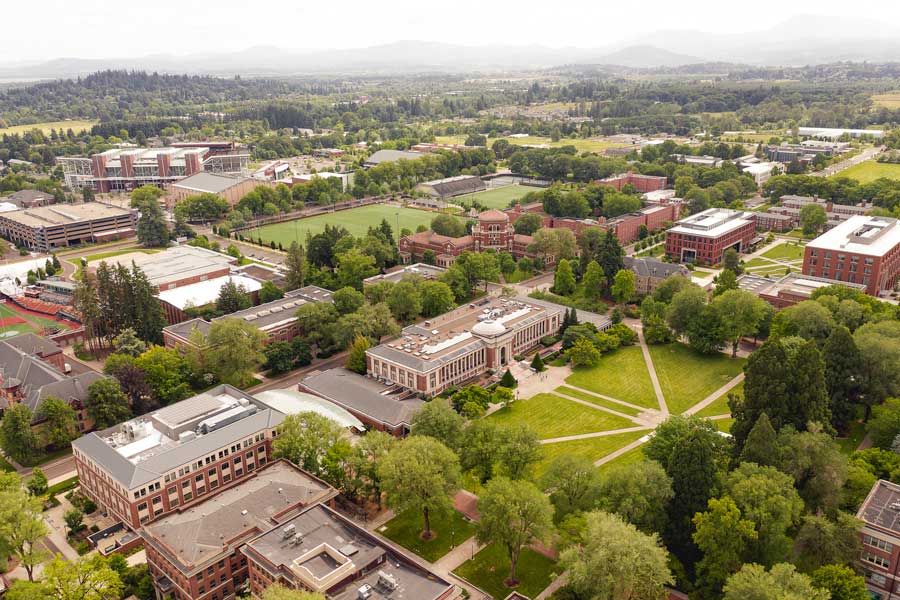
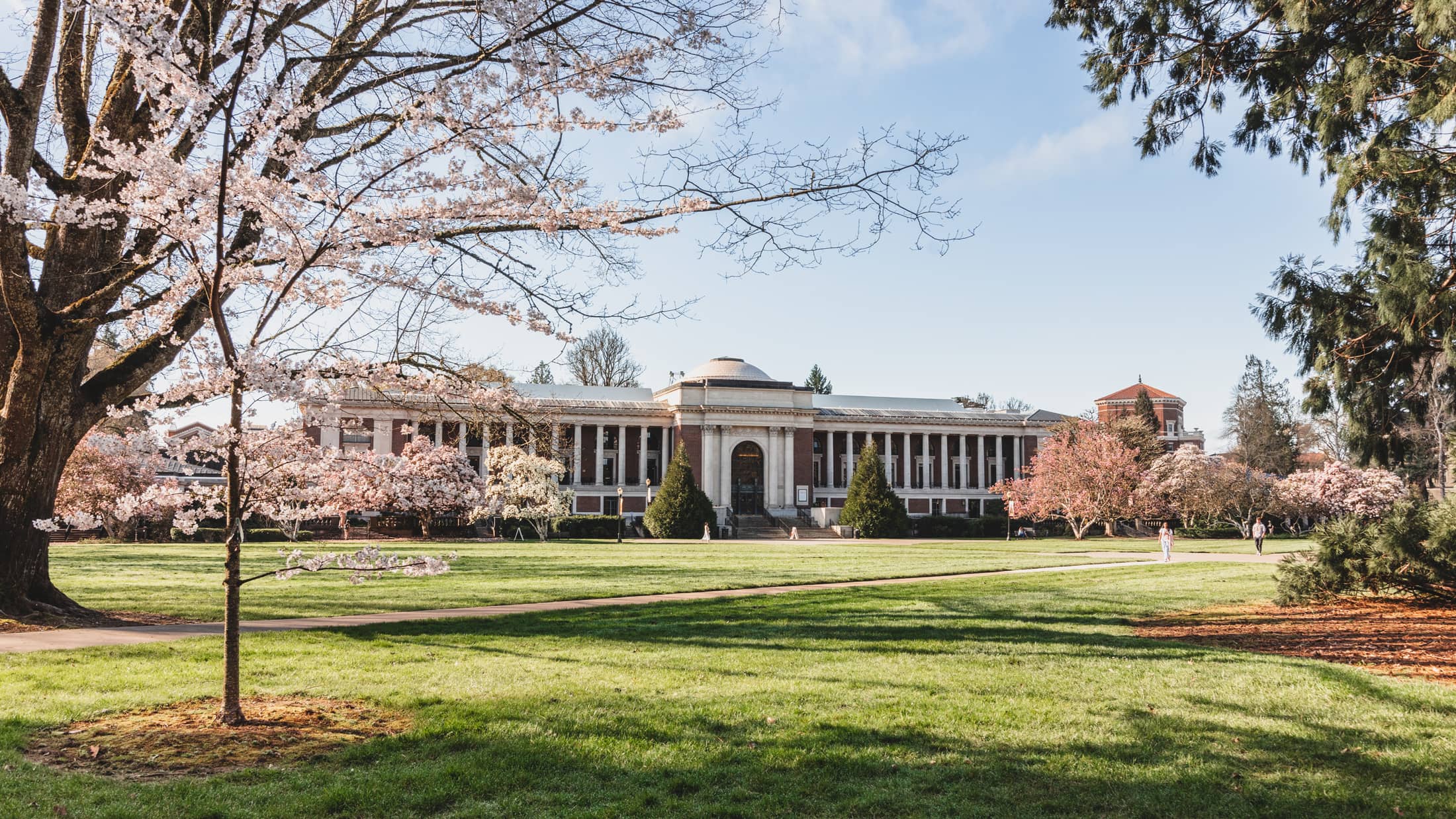
Oregon State University is a Land, Sea, and Space Grant institution located in the Willamette Valley between the Oregon Coast and the Cascade Mountains, approximately eighty miles south of Portland. The University traditionally is noted for strong graduate programs in scientific, engineering, and agricultural fields.

Some faculty in the History of Science Graduate Program have appointments in both history and science departments, enhancing educational and research opportunities for graduate students. The Horning Endowment for the Humanities sponsors lectures, conferences, and colloquia that strengthen a deeper understanding of the humanities among science students and bridge the humanities and the sciences. Horning activities often focus on the history of science.

Among noteworthy resources at OSU for the history of science are the archival and on-line collection of the papers of Ava Helen and Linus Pauling in the Special Collections of the Valley Library. The History of Atomic Energy Collection is an archival reference library documenting the history of atomic energy since the discovery of radioactivity in 1896. The Program for Ethics, Science, and the Environment, based in the Philosophy Department, supports multi-disciplinary education and scholarship aimed at recognizing, understanding, and resolving conflicts of value resulting from scientific knowledge, biotechnology, and the use of natural resources.


Degrees and Application Guidelines


The History Department offers the degrees of Master of Arts (MA), Master of Science (MS) and Doctor of Philosophy (PhD) in History of Science. The History Department also participates in the Master of Arts in Interdisciplinary Studies (MAIS) program, in which students may take one or two fields in history or history of science among the three fields required for the degree.

Students with substantial scientific or historical background are encouraged to apply to the Graduate Program in History of Science. The Graduate Record Examination (GRE) is required, along with a writing sample and other materials, and the GRE and should have been completed within five years of the application. Students who have not completed a master's degree in history of science should apply to the master's program even if the intent is to pursue the Ph.D.

The deadline for applications to the MAIS Program is March 1 for the summer and fall quarter and November 10 for the winter or spring quarter. It is preferred that students begin the graduate program is the fall term (March 1 application deadline).

The deadline for applications to the History of Science Graduate Program is January 1 for admission in the fall quarter of the academic year. Applicants who wish to apply for graduate research assistantships or graduate teaching assistantships should indicate this on an application meeting the January 1 deadline for admission in the fall quarter. Assistantships ordinarily are awarded around April 1 for the following academic year.

An appointment as graduate assistant includes a tuition waiver and a stipend. Oregon State University is a member of the Council of Graduate Schools. Accordingly, students are under no obligations to respond to financial support prior to April 15. For further information about financial support and loans, contact the University's Financial Aid Office, 541-737-2241.


Faculty Fields in History of Science


Mina J. Carson (Harvard 1984, Associate Professor), history of psychology and social work, American social and cultural history.

Marisa Chappell (Northwestern 2003, Assistant Professor), 20th-century U.S. history; focus on politics, social policy, and political economy of race and gender.

Gary B. Ferngren (University of British Columbia 1973, Professor), social history of ancient medicine, historical relationship of science and religion, history of Greece and Rome.

Anita Guerrini (Indiana University 1983, Horning Professor in the Humanities), history of life sciences and medicine; focus on environmental history and the history of animals.

Jacob Darwin Hamblin (UC Santa Barbara 2001, Assistant Professor), history of science, technology, and environment.

William Husband (Princeton 1984, Professor), social displacement, cultural continuity and change, and the consolidation of political authority during the early Soviet period.

Paul E. Kopperman (Illinois 1972, Professor), military medicine in the 18th century, English history, history of the Holocaust.

David S. Luft (Harvard 1972, Horning Professor in the Humanities), modern Central European history, including Germany, Austria, and the Habsburg Monarchy.

Ben Mutschler (Columbia 2000, Associate Professor), colonial America, early American history and culture, history of colonial medicine.

Michael A. Osborne (Wisconsin 1987, Professor), history of modern biology, medicine, and environmental issues.

Lisa T. Sarasohn (UCLA 1979, Professor), early modern science, medieval and early European history.

Stacey Smith (Wisconsin 2008, Assistant Professor), history of the North American West; emphasis on race relations, labor, and politics in 19th-century California.

Jeffrey Sklansky (Columbia 1996, Associate Professor), history of the social sciences, 19th- and 20th-century U.S. cultural and intellectual history.

Additional history faculty members have expertise in the history of the U.S., Russia, China, the Middle East and Islamic cultures, Latin America and Mexico, and Africa, with fields including African American history, the history of women, Native American history, and U.S. foreign relations.


Recent Books by History Faculty


Mina Carson, Girls Rock: Fifty Years of Women Making Music (University Press of Kentucky, 2004).

Gary Ferngren, Science and Religion: A Historical Introduction (Baltimore and London: Johns Hopkins University Press, 2002).

Anita Guerrini, Experimenting with Humans and Animals: From Galen to Animal Rights (Johns Hopkins University Press, 2003).

Jacob Darwin Hamblin, Poison in the Well: Radioactive Waste in the Oceans at the Dawn of the Nuclear Age (Piscataway, NJ: Rutgers University Press, 2008). Paperback edition 2009.

Jonathan Katz, Murder in Marakesh: Émile Mauchamp and the French Colonial Adventure (Indiana University Press, 2006).

Mary Jo Nye, ed. Blackett: Physics, War, and Politics in the Twentieth Century (Cambridge, Mass.: Harvard University Press, 2004).

Lisa Sarasohn, The Scientific Revolution (New York: Houghton Mifflin Company, 2006).

Jeffrey Sklansky, The Soul's Economy: Market Society and Selfhood in American Thought, 1820 - 1920 (Chapel Hill: University of North Carolina Press, 2002).


Associated Faculty in the Philosophy Department


Sharyn Clough (Simon Fraser University 1997, Associate Professor), late19th- to early 20th-century history of biology, analytic philosophy of science, especially philosophy of biomedicine, and feminist science studies

Jonathan Kaplan (Stanford University 1996, Department Chair, Associate Professor), biomedical ethics, philosophy of economics, epistemology, metaphysics, Wittgenstein.

William L. Uzgalis (Stanford 1981, Professor), epistemology and metaphysics, history of modern philosophy.


For further details, please contact the History Department.


Equal Opportunity: Oregon State University, in compliance with state and federal laws and regulations, does not discriminate on the basis of race, color, national origin, religion, sex, sexual orientation, marital status, age, or disability or veteran's status in any of its policies, procedures, or practices. Inquiries regarding the University equal opportunity policies may be directed to the Affirmative Action Office at (541) 737-3556.


Links