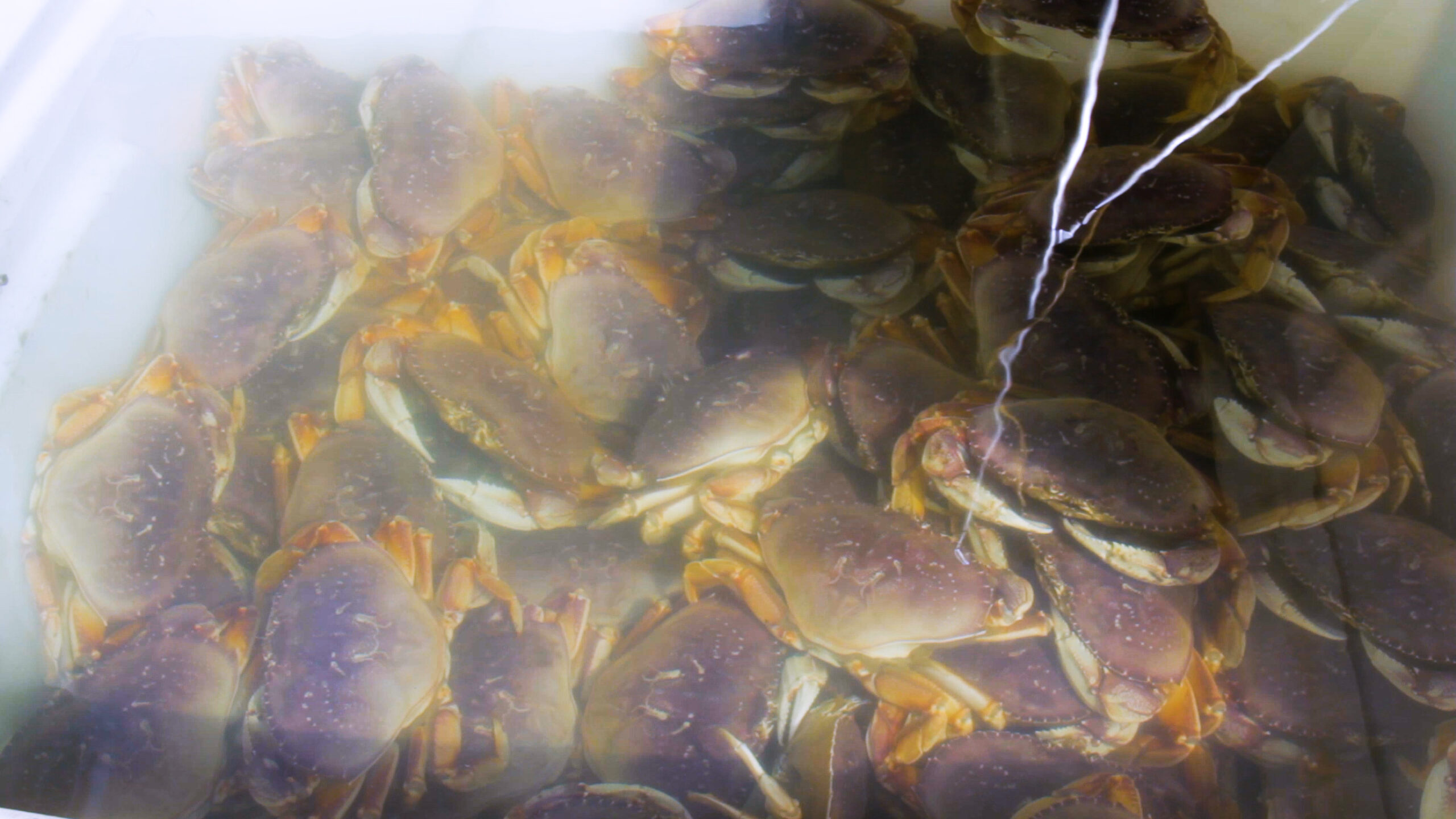
The 2010 oil spill in the Gulf of Mexico brought up bad memories for Sarah Allan. The Oregon State University Ph.D. student, who grew up in southeast Alaska, was a child in 1988, when the Exxon Valdez struck a reef and dumped millions of gallons of crude into another rich marine ecosystem, Prince William Sound. [...]
Category » Stewardship
December 22, 2010
Yellow tang study shows marine reserve benefit
Marine ecologists at Oregon State University have shown for the first time that tiny fish larvae can drift with ocean currents and “re-seed” fish stocks significant distances away – more than 100 miles in a new study from Hawaii.
November 20, 2010
Linking Climate Sciences and Society
The Oregon Climate Change Research Institute will lead efforts to assist government agencies and the public.
November 20, 2010
Neil Shay to Lead OSU’s Wine Institute
A molecular biologist who makes wine from his own grapes will lead research to support Oregon’s wine industry.
November 19, 2010
Farming on the Fringe
Urban homeowners and farmers don’t always see eye-to-eye, but along with new neighbors come opportunities.
November 19, 2010
Earth Ethics
Extension’s National Network for Sustainable Living Education has grown from the work of OSU professor Viviane Simon-Brown. Starting with 12 colleagues in five states in 2004, more than 80 people at 30 land grant universities now collaborate to promote planet-friendly lifestyles.
October 19, 2010
A Way Forward for Oregon’s O&C Forests
Any fair-minded reading of the history of the O&C (Oregon and California Railroad) lands in Western Oregon would conclude that they were intended to provide economic support for the 18 counties in which they reside.
October 12, 2010
Talking About Water
Lest we forget that environmental and human health are intimately connected, the Gulf of Mexico oil spill delivered that message in spades. Dead birds and seaturtles were the poster animals for an event that closed fisheries and elevated health risks from volatile oil-based compounds in the air and water. Oregon State University researchers are working [...]
July 23, 2010
Birding by Ear Online
Recording the subtle syllables, notes and motifs that distinguish one bird species from another requires some pretty sophisticated gear. But for OSU researchers, collecting audio data in an old-growth forest last summer was a walk in the park compared with analyzing it. “It’s a lot of data,” reports Jed Irvine, a faculty research assistant in [...]
April 24, 2009
Where Grass Seed Is King
Oregon’s Willamette Valley is the undisputed “grass-seed capital of the world.” In close partnership with growers and scientists at the U.S. Department of Agriculture, OSU researchers and agronomists have been at the forefront of an industry worth $500 million. Here are some of the milestones. 1909 Seed lab starts up on campus for research and [...]
April 24, 2009
Buzz About New Honeybee Specialist
Ramesh Sagili arrived in Corvallis in February to start a honeybee research program targeting mites, pesticides, stress and nutrition. The new OSU bee specialist is part of an initiative to help ensure that there are enough healthy honeybees to pollinate Oregon’s crops. Sagili says Varroa mites, nutritional deficiencies or other factors might be the cause [...]
April 24, 2009
Envisioning the Forest
John Sessions likes to refer to forestry as “a bio-energy puzzle.” Like a lot of 21st-century puzzles, its solutions are digital and mathematical. “Forest landscape planning, as it is known today, was not possible before the advent of high-speed computers, geographic information systems, modern algorithms and graphic interfaces,” says the holder of the endowed Richard [...]
April 24, 2009
Restoring the Flow
If you had happened upon Lake Creek, a tributary of Central Oregon’s Metolius River, in the fall of 2007, you might have seen Matt Shinderman and his Ecological Field Methods students standing nearly knee-deep in the water with dip nets in hand, hovering over tic-tac-toe style grids. And you might have been puzzled when they [...]
February 24, 2009
Living Downwind
By collecting and testing the toxicity of particles in Northwest air samples, OSU Ph.D. student Julie Layshock is shedding light on the relative health threat posed by long-distance air pollution.
February 24, 2009
Lubchenco Nomination Underscores OSU’s National Leadership
The nomination of Oregon State University marine ecologist Jane Lubchenco to head the National Oceanic and Atmospheric Administration reflects OSU’s growing leadership in federal environmental science programs.
February 24, 2009
On Course
Rob Golembiewski wears a size-13 shoe, but that’s nothing compared with the shoes he has to fill. The former head of the golf and turf management program at the University of Minnesota’s Crookston campus has replaced Tom Cook as the director of Oregon State University’s turf management program. Thirty-one years ago, the hardworking and revered [...]
February 22, 2009
Once and Future King
Meriwether Lewis and William Clark were early witnesses to the majesty that is the salmon in the Pacific Northwest. When the explorers first came upon the confluence of the Yakima and Columbia rivers, they observed a scene that was both confusing and awe-inspiring. Wrote Clark: “This river is remarkably Clear and Crouded with Salmon in [...]
July 19, 2008
Horse Power
When a horse develops an infection, its owners usually turn to a rural veterinarian. But when lameness strikes an Oregon Appaloosa or quarterhorse, rural vets increasingly refer their patients to OSU’s College of Veterinary Medicine for treatment. And with good reason. A team of highly qualified surgeons, working in facilities that just underwent a $12 [...]
April 23, 2008
Windows on Watersheds
Old-style logging left scars on the landscape, but nearly 40 years ago, research in Oregon changed tree-cutting practices. Now researchers are joining landowners to update the science behind modern forest management.
April 23, 2008
OSU Watersheds Research Cooperative
Networking is key in watershed science. The WRC spurs collaboration by researchers from OSU, government and private companies. Members contribute money or in-kind resources such as land and expertise. Current WRC projects include the Hinkle Creek, Trask and Alsea projects. Funding has come from state and federal funds as well as WRC members. The WRC [...]
April 23, 2008
Inside the Hinkle Creek project
Stream flow Measuring flow rate and and stream height reveals how water moves through the landscape. Researchers are also tracking stream sediment loads using the next generation of computerized water-sampling devices. Arne Skaugset’s water-quality lab analyzes more than 2,000 samples per year from the Hinkle Creek, Trask, Alsea and Oak Creek (near Corvallis) watersheds. Insects [...]
April 1, 2008
A New Lens on Wildlife
What do the following Oregon animals have in common: the northern red-legged frog, the chestnut-backed chickadee, the western pond turtle and the river otter? All fall into the traditional wildlife designation “non-game.” “It’s a catch-all category for those species that aren’t being managed for hunting or fishing,” says OSU wildlife ecologist Bruce Dugger. That once-undifferentiated [...]
January 23, 2008
Scientists to Bark Beetle: “No Vacancy”
You think it’s difficult to master a complex foreign language like Chinese or Greek? Try learning how to speak “bark beetle.” After about 30 years of study, researchers at OSU have done exactly that. Along with U.S. Forest Service colleagues, they’ve figured out what a particular pheromone is communicating to Douglas–fir bark beetles and now [...]
January 23, 2008
Invaders in the Dunes
Unnoticed by most beach–goers, a showdown is under way in Oregon’s coastal dunes, and the winner could pack increased risks for coastal property, especially during winter storms. OSU scientists have documented a slow but steady takeover by American beach grass (Ammophila breviligulata), an invasive species from the East Coast and Great Lakes. They have found [...]
July 23, 2007
Cyberforest Unplugged
The science of mountain airsheds requires a strong back as well as a sharp mind — especially when you’re lugging a 65-pound golf-cart battery in your pack. An interdisciplinary team of OSU students spent 10 weeks this summer scaling the steep slopes of H.J. Andrews Experimental Forest to enable researchers to unplug their high-tech gear [...]
July 23, 2007
Great Blue Engine
The ocean shimmers to the curved rim of the Earth. Pressing her face against the jetliner window, Dawn Wright scans the azure expanse for a glimpse of her destination, a tiny volcanic archipelago that is barely a blip in the vast South Pacific. At 5,000 miles from Wright’s office at Oregon State University, American Samoa [...]
July 4, 2007
Salmon Survival
Ocean conditions play a key role in the health of Northwest salmon runs, and scientists at OSU’s Hatfield Marine Science Center are trying to pinpoint why. Clearly there are more salmon during cold-water regimes, when strong and persistent upwelling fertilizes the marine food web. Bill Peterson, a federal biologist at the Hatfield Center, says one [...]
June 4, 2007
Feast or Famine
Gray whales have roamed the world’s oceans for some 30 million years. The species hasn’t survived that long without adapting to changes, such as those in the California Current over the past decade. 2006 was a banner year for the whales and whale watching on the central Oregon coast. In kelp beds a mere quarter-mile [...]