


Web page designed by Mark McLaughlin (Spring 2004)


Link to Course Website


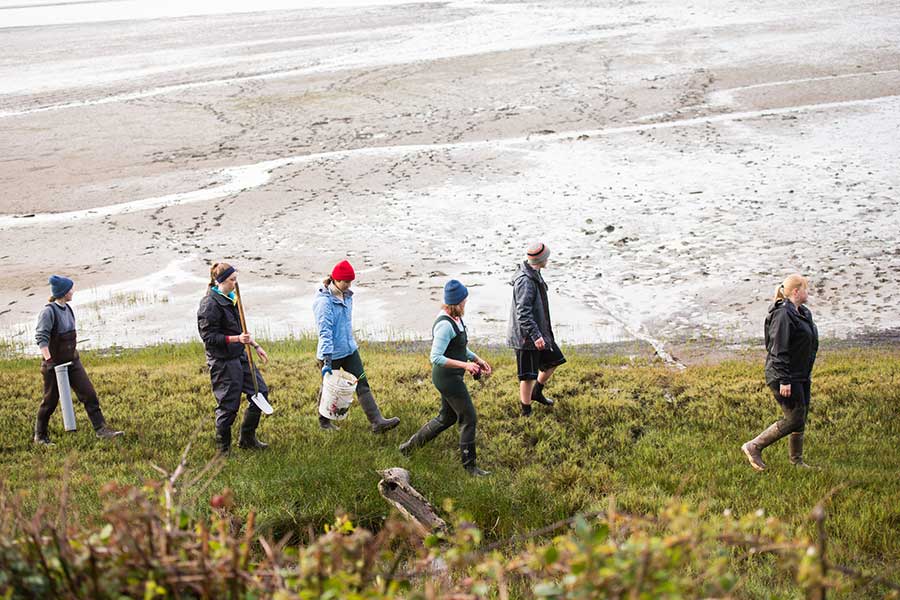
From March 21 to March 25 fourteen students took a non-traditional action research approach to learning about Environmental Justice in Oregon. Through listening, analysis and collaboration with different community stakeholders including: farmers, environmental activists, state legislators, urban planners, economists, health care providers, extension services, urban developers, media reporters, fishing industry representatives, and community residents, course participants  developed a better understanding of the complex web of issues that exist in trying to achieve environmental justice in the State of Oregon today. The course embodied a non-traditional approach to learning that blurred the boundaries between teacher/ student/ community/ researchers.


What is Environmental Justice?


The Definition According to the 
U.S. Environmental Protection Agency:
 
 
Environmental Justice is the fair treatment and meaningful involvement of all people regardless of race, color, national origin, or income with respect to the development, implementation, and enforcement of environmental laws, regulations, and policies. Fair treatment means that no group of people, including a racial, ethnic, or a socioeconomic group, should bear a disproportionate share of the negative environmental consequences resulting from industrial, municipal, and commercial operations or the execution of federal, state, local, and tribal programs and policiesMeaningful involvement means that: (1) potentially affected community residents have an appropriate opportunity to participate in decisions about a proposed activity that will affect their environment and/or health; (2) the public's contribution can influence the regulatory agency's decision; (3) the concerns of all participants involved will be considered in the decision making process; and (4) the decision makers seek out and facilitate the involvement of those potentially affected.

In sum, environmental justice is the goal to be achieved for all communities and persons across the Nation. Environmental justice is achieved when everyone, regardless of race, culture, or income, enjoys the same degree of protection from environmental and health hazards and equal access to the decision-making process to have a healthy environment in which to live, learn, and work.


Themes of Environmental Justice From Listening to the Stakeholders


Environmental Justice

  • Equality
    • Finding a Just Solution
    • Equal Distribution of cost
    • Balance between Economics and Natural Resources
    • Rights/Duties 
  • Community Participation
    • Is an Issue of Access
      • Decision-Making: Who is making the decisions for whom?
      • Information/Education: Including Face-to-Face Interaction
    • Respect: Ask people what are the issues they face, don't tell them.
    • Partnerships: Involving the community and making sure every voice is heard.
    • Leadership: Necessary resource to achieve community participation and achieve Environmental Justice 
  • Regulatory and Economic Factors
    • Handcuffs and Red-Tape
    • Responsibility and Duties
    • Identifying Impacts
    • Economic Incentives/Costs
    • Good Solid Science 
  • Legislative Factors
    • Long and Short Term needs must be met
    • Intrinsic and Economic Values are not always consistent
    • But Democracy Can Lead to Environmental Justice
      • Communication is Key ?Access 
      • Regulations are Needed

The Government as a Solution

  • Surpassing level of requirements of laws
    • Looking toward future changes
    • Provides a model for other stakeholders
  • People will not support regulations if the economy is struggling
  • In the end, economic incentives are provided 
    • For being environmentally conscious 
    • By following regulations
  • New regulations can create new economic opportunities
  • Democracy leads to environmental justice
  • Government must play a major roll in finding solution to environmental justice issues

Steps Individuals Can Take
  • The Rs:
    • Reduce 
    • Recycle 
    • Reuse
  • Humility
  • Voluntary Action
  • Change Through Action
  • Remember Where You Came From 


"Environmental justice starts with the heart,

then moves to the head,

and finally into your hands and feet to go help community."


Having taken this course, I learned a great deal from actually listening to what other people had to say.  I think that a lot of the time we go through life just focused on ourselves, and our own trials and tribulations.  But if we really stopped to think for a minute, and hear the other side of an issue, or even just hear the issue in the first place, we as a community can participate and work together to solve whatever issue we are facing.  Building strong communities and creating resilient partnerships and leaders will ensure that our communities receive the justice they so deserve.  And we must do that by educating ourselves, as well as educating others around you, to ensure that such goals are met, and that such issues are addressed.  Working together we can help ensure that our communities are free from environmental threats to human health, and safety, and that any injustice is vindicated.


To Find Out More About Environmental Justice Visit The Web Sites Associated With This Page:

EJ Related Sites:

EPA Related Sites:


  • The National Environmental Justice Advisory Council (NEJAC) is a federal advisory committee that provides independent advice, consultation, and recommendations to the Administrator of EPA on matters related to environmental justice; 
  • The federal Interagency Working Group on Environmental Justice (IWG) was established by Executive Order 12898 in 1994. The IWG is made up of twelve federal agencies and chaired by EPA, targets coordinated federal initiatives and resources to help environmentally and economically distressed communities;
  • The OEJ grants programs are designed to address environmental justice concerns and issues. In addition to these grant programs, there may be other EPA grants that include environmental justice components;
  • EPA's Office of Environmental Justice sponsors a Community Intern Program through a cooperative agreement with the Environmental Careers Organization (ECO).

Other Links Related to Stakeholders:


Thanks To All Of Our Stakeholders!


Paul Barkley

Lani Roberts

Bob Zybeck

Dave Hatch

Connie Kennedy

Fran Recht

Ron Eber

Kevin O'dell

Charles Bishop

Jeri Sundaval

John Hayward

Carolyn

Helen Berg

Steve Love

Sherry Pleu 

Larry Venell

Teresa Hogue

Emery Castle