


Campus Facilities and Grounds
Section 001: Introduction
Effective: 04/20/2010
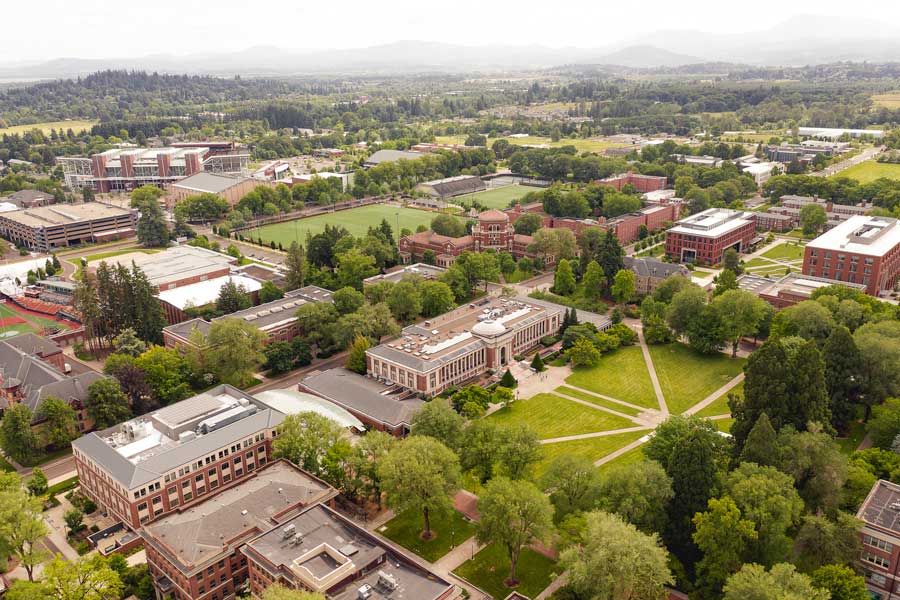
The Campus Facilities and Grounds Policy and Procedure Manual (CFG) provides the user with policies and procedures applicable to the design and development of the facilities and grounds at the Oregon State University campus. The CFG applies to all university departments. The Procurement and Contract Services (PaCS) Policy & Procedure Manual, however, may specify different procedures if required by a grant or contract, or if more appropriate.
Information regarding Facilities Services and the services provided can be found on our website http://oregonstate.edu/facilities/. Corrections, changes, or suggestions for the manual should be communicated to the CFG Manual Coordinator via e-mail or phone: 541-737-7670.
In the event of an inconsistency or conflict, applicable law and Board of Higher Education policies supersede university policies and university policies supersede college, department or lower unit bylaws, policies, or guidelines.
The University reserves the right to add, amend, or revoke any of the contained rules, policies, regulations, and instructions or incorporate additional ones, with or without notice, as circumstances or the good of the university community may require.
Campus Facilities and Grounds Manual Overview
The Campus Facilities and Grounds Manual includes the roles and responsibilities of parties involved in construction activities at the Oregon State University campus, and specific policies governing how the work will be completed. These policies are not intended to be the policies of Facilities Services, but rather University policies for the design and development of campus buildings and grounds.
Facilities Services is the central coordinating unit for Oregon State University Design, Development, and Maintenance activities and, as such, is in charge of ensuring the planning, development and construction of facilities is completed in accordance with this manual and the applicable Oregon Administrative Rules, Oregon Revised Statues, State and local comprehensive plans, the Campus Master Plan, and local land development code requirements.
Campus Facilities and Grounds
Section 002: Definitions
Effective: 04/20/2010
Terms used in the Campus Facilities and Grounds Policy and Procedures Manual are defined as follows:
Adaption. The alteration and/or renovation of facilities designed to retain the value of the facility and to respond to changing institutional needs and external standards.
Alteration. The changing of internal arrangements or other physical characteristics of an existing facility for most effective use, including interior finishes, cabinets, and moving walls.
Bid. Competitive offer by an outside contractor or vendor in which price, delivery (or project completion), and conformance to specifications are the predominant award criteria.
Building Manager. Building Managers are responsible for monitoring the buildings to which they are assigned. For a list of duties and responsibilities, contact the Work Coordination Center (WCC).
Building Systems. Attachments to the building, such as wiring and electrical service and fixtures, central air conditioning and ventilation system, heating system, plumbing, fire protection system, and environmental monitoring system. This does not include movable equipment such as freezers.
Building Use Credits. Three percent (3%) of the total Indirect Cost Recoveries from grants and contracts is set aside for improvements to facilities that directly or indirectly support research. The 3% represents the building use allowance component of indirect costs.
Capital Repair Program. The planning and budgeting for known future repair and replacement requirements that extend the life and retain the usable condition of campus facilities and systems not normally contained in the annual operating budget. Such requirements include: building upgrades, code requirements, major items that have a maintenance cycle over one year (e.g., replacing roofs, painting buildings, resurfacing roads, replacing chillers, transformers, etc.).
Campus Master Plan. The document that comprises the policies, guidelines and development standards for OSU’s physical development. The document and zoning regulations are approved through the public land use approval process.
Capital Construction. Refer to Oregon Administrative Rule (OAR) AR 580-63-0005 http://arcweb.sos.state.or.us/rules/OARS_500/OAR_580/580_063.html.
Capital Construction Project. Any project subject to the terms and conditions of OAR 580-63-0005. In addition, a Capital Construction project is any project in which the total budget exceeds $500K.
Change Order. Amendment to a contract or project for additional work, extra work, deletion of work, or any change in the original scope of work or specifications that may result in a change in the original contract price and/or change in contract time.
Charge-Back. Costs for services rendered and billed by Facilities Services to the requesting departments, unless paid for by other funding sources.
Charge-Back System. A system of cost control that requires the requesting unit or organization to pay for work done to its area.
Circulation Area. The portion of the gross area of a building required for physical access to various divisions and subdivisions of space.
Construction. Involves the erection of a new facility, or the addition or expansion of an existing facility that adds to a building’s overall dimensions. Construction involves support facilities for buildings, including outside utilities, parking, roads, sidewalks and landscaping, or any building addition or improvement to any OSU facility.
Cyclical Maintenance. Maintenance that can be predicted and performed on a regular basis (cycle).
Deferred Maintenance. Maintenance projects not included in the maintenance process nor in the capital repair process due to a lack of funding.
Design Authorization. Written agreement authorized by department head to pay for design work required for the Scope of Work indicated.
Estimate. An approximation of the expected cost to complete the work indicated. See Scope of Work.
Equipment Maintenance & Repair. Refer to http://oregonstate.edu/dept/budgets/genupol/gupfixed.htm.
Facilities Services. The organization that is responsible for overseeing the planning, development, operation, and maintenance of university buildings, structures and grounds.
Facilities Services shall:
Final Design. Includes drawings, scope of work, specifications, equipment and material lists, permits, and any other documentation required to initiate, complete, and inspect construction.
Fixed Equipment. Equipment affixed to a building and similar to building system equipment is considered fixed equipment. This includes fume hoods, autoclaves, sterilizers, lab benches and cabinets, cage washers, overhead cranes and hoists, affixed power generators, dormant scales, walk-in freezers, water fountains, sinks, faucets, eye washers, office fixtures, chalk/white/bulletin boards, attached/installed projector screens, carpets, window drapes and blinds, etc. Building Maintenance & Repairs’ account code 23502 is used.
Footprint. The working square footage required supporting a particular function; this often includes space for furniture as well as chair movement and circulation.
Hazardous Waste. A waste substance that may cause severe illness, death, or may cause a substantial hazard to health or the environment when improperly managed.
Historic District. A historic district is designated by the National Register of Historic Places. The historic district is a physical boundary around an area or a boundary and includes buildings, open spaces or landmarks identified as contributing and/or noncontributing resources within the area and/or boundary.
Improvement. Addition of quality features to existing space by upgrading mechanical or electrical systems or architectural finishes. (Examples are installation of carpet on worn floors, the addition of air conditioning, or installation of special lighting to create an aesthetic condition).
Also See Renovation.
Land Development Code. Land development regulations are administered by a Local Certified Government body in accordance with comprehensive plans. The code is intended to ensure that development is of the proper type, design, and location; serviced by a proper range of public facilities and services; and consistent with goals and policies in a comprehensive plan. It may also include a development approval process that shall not result in the exclusion of needed housing at densities permitted by the underlying zoning designations, or result in unreasonable costs or delays.
Maintenance. Systematic day-to-day process funded by the annual operating budget to control the deterioration of university facilities (e.g., structures, systems, equipment, pavement, grounds), and includes landscape management, custodial, and call-in requests for service.
Examples Include:
Minor Construction Project. A project that is less than $25,000 and requires a single contractor or single Facilities Services trade or shop.
Moveable Equipment. Equipment which can be moved and is either minor equipment or on the Fixed Asset equipment inventory. This includes office furniture, office equipment , window and plug in air conditioner units, electric water coolers, specialized lab equipment such as spectrometers, low temperature freezers, ductless fume hoods, centrifuges, operating room equipment, major medical instruments and equipment, laundry equipment, cafeteria and kitchen equipment, portable generators, etc. Equipment Maintenance & Repairs’ account code 23501 is used.
Preliminary Planning Figure. Estimate of the funding required for a preliminary Scope of Work—generally given as a range on a Design Authorization Form.
Preventive Maintenance. Planned actions undertaken to retain an item at a specified level of performance by providing repetitive scheduled tasks which prolong system operation and useful life (i.e., inspection, cleaning, lubrication and part replacement).
Project Architect. The person, firm or corporation appointed by the Owner (Facilities Services) to provide a design, contract documents, and contract administration of construction work.
Project Authorization. The written agreement authorized by a department head to pay for the design and construction work required to complete the scope of work indicated.
Project Manager. Is an employee of Facilities Services that coordinates and facilitates the project and project sponsors’ goals in accordance with the Project Review Team’s recommendations or requirements.
Project Review Team. The Project Review Team (PRT) is a team of representatives from Facilities Services, and perhaps other parties involved in a project coordination effort, that cooperatively reviews and develops the scope of work as it relates to the planning, development, long-term operation, and maintenance of campus buildings and structures. The PRT serves as an agent to the Vice President of Finance and Administration to ensure the applicable campus policies, regulations, and requirements are incorporated into the project.
Project Sponsor. An individual or individuals seeking to plan or initiate an improvement or development.
Punch List. A list of deficiencies, incomplete or unacceptable work items compiled by the project manager during the final inspection of a project.
Renovation. Total or partial upgrading of a facility to higher standards of quality or efficiency. Under certain conditions a renovation may also be classified as an improvement.
Repair. The restoration of a facility allowing its effective use for its designated purpose. Repai; overhauls or replaces major parts deteriorated by usage or the elements.
Routine Maintenance Project. A project that does not require new construction or work typically associated with the life cycle maintenance requirements of finishes, fixtures, or equipment (this may include the replacement of equipment or specific parts).
Schematic Phase. The first stage in a construction project that confirms the project program. This phase includes the development of a project design and construction schedule, preparation of initial cost estimates, and descriptive drawings and/or study models of the project design.
Scope Changes. A change to the written and agreed upon scope of work requested by the customer or resulting from unanticipated occurrences during the project. Scope changes may or may not involve a change in project cost or time on a change order.
Scope of Work. A written statement or list of tasks, reached through consultation with department personnel and defines the actual work to be done. It is presented to the department either on a drawing or as a separate document.
Service Call.
Strategic Plan. A plan that projects programs five to ten years for most business functions. Some strategic facility management plans project three to five years.
Transit and Parking Services. Transit and Parking Services is part of Facilities Services and the organization that is responsible for the transit and parking management on campus. Refer to http://oregonstate.edu/facilities/transit_pkg/index_pkg.html .
Value Engineering. Evaluation of construction methods and/or materials to determine which have the net result of reducing costs, consistent with specified performance, reliability, maintainability, aesthetic, safety, and security criteria.
Work Order. A number assigned to a service call (maintenance or repair request) or project work request that is processed by the Facilities Services Work Coordination Center. Information regarding the request is entered into the departmental CMMS, a unique work order number is assigned to the request, and a work ticket is generated describing the request details.
Work Request. A service call (maintenance or repair request), project request or estimate request submitted to the Facilities Services Work Coordination Center for processing.
Work Coordination Center. The Work Coordination Center (WCC) is Facilities Services’ Administrative Unit that receives requests from customers, and initiates/directs the work request and project request work flow process. The WCC should be the first point of contact for all inquires to Facilities Services.
Campus Facilities and Grounds
Section 003: Roles and Responsibilities
Effective: 04/20/2010
Revised: 11/11/2011
Facilities Services is a service organization that oversees the construction, development, operation and maintenance of the physical space and grounds of the Oregon State University campus.
When to Involve Facilities Services
The service organization that, in conjunction with Facilities Services, develops and executes all construction contracts, and purchase orders for materials, equipment, or construction services for projects over $5,000 in contract value and all design contracts regardless of contract amount.
When to involve PaCS
A Building Manager is an Oregon State University faculty or staff member appointed to coordinate the construction, operation, maintenance and custodial needs of the building with Facilities Services. The Building Manager is not authorized to commence construction activities or renovations of space without the approval of Facilities Services.
The Campus Planning Committee (CPC) is an advisory body that makes recommendations to the Vice President of Finance and Administration on the site selection and design development of building or other exterior improvements.
Deans and Directors provide authorization to commence alterations and adaptations to space that is assigned to their College or Department. They are responsible for contacting Facilities Services when any proposed alteration or adaptation occurs, or when equipment is purchased.
The University Space Planning Committee is an advisory body that makes recommendations to the Vice President of Finance and Administration and the Provost regarding University space policies, guidelines, allocations, and other matters relating to the use and management of the physical space on campus.
The Parking Committee is an advisory body that makes recommendations to the Vice President of Finance and Administration regarding the policies of the parking management on campus.
Campus Facilities and Grounds
Section 004: Planning, Construction, and Maintenance
Effective: 04/20/2010
Revised: 03/04/2011
Campus Facilities and Grounds
Section 005: Transit and Parking Services
Effective: 04/20/2010
Campus Facilities and Grounds
Section 006: Environmental Health and Safety
Effective: 04/20/2010
Campus Facilities and Grounds
Section 007: Campus Facilities and Grounds Policies and Procedures
Effective: 04/20/2010
Campus Facilities and Grounds
Section 007: Campus Facilities and Grounds Policies and Procedures
Effective: 04/20/2010
The University establishes the building schedule based on the term class schedule. Department Heads may have buildings and rooms open for special meetings during after-hours. The Department of Public Safety (737-3010) and the custodial contractor are responsible for opening and closing most academic buildings. Typical opening and closing of academic buildings is as follows:
a. Open at 6:00 a.m. Exceptions: Saturday, Sunday, and holidays
b. Close at 6:00 p.m. Exceptions: Buildings used for evening classes close at 10 p.m.
c. Contact the Building Manager and/or Department of Public Safety for emergency building access. Campus emergency, dial 541-737-7000, campus non-emergency, dial 541-737-3010 or at http://oregonstate.edu/tools/mailform?to=osp.dps@oregonstate.edu&recipient=Oregon+State+Police+Trooper/Public+Safety+Officer.
Campus Facilities and Grounds
Section 007: Campus Facilities and Grounds Policies and Procedures
Effective: 04/20/2010
The locking and unlocking of an academic general purpose classroom is coordinated between the Building Manager and the Registrar’s Office.
Campus Facilities and Grounds
Section 007: Campus Facilities and Grounds Policies and Procedures
Effective: 04/20/2010
Coordinate after-hours building and room access with the Building Manager and the Office of the Registrar.
Campus Facilities and Grounds
Section 007: Campus Facilities and Grounds Policies and Procedures
Effective: 04/20/2010
a. The Oregon State Board of Higher Education established, in the Administrative Code, the following policy regarding “Use of Facilities by Outside Organizations.” In general, it shall be the policy of the various institutions in the state system not to make available the buildings and other facilities of these institutions. Exceptions to this policy shall be approved by the Executive Vice President or President of the institution. In general, exceptions will be made only in the case of community, regional, or state gatherings where no admission fee is charged. The benefiting organization, in all instances, will be expected to meet normal expenses, such as custodial, policing, etc.
b. All individuals or groups requesting meeting space at Oregon State University shall schedule meetings by contacting:
c. Schedule meetings ahead of meeting time to:
d. Requests must contain the following information:
e. General Purpose Classrooms available for evening use are:
f. After Hours Classroom Activities:
- Student chapters of professional academic societies
- Regional or national seminars, conferences, short courses
g. Responsibilities of the scheduling organizations are to:
Campus Facilities and Grounds
Section 007: Campus Facilities and Grounds Policies and Procedures
Effective: 04/20/2010
a. Departments obtain after-hours use permits annually from Department of Public Safety.
b. An after-hours use permit is required after normal open hours.
c. An after-hours use permit is issued and signed by the dean or department head.
d. An after-hours permit log shall be kept by the dean or department head showing:
e. Individuals without a staff card or after-hours permit will be asked to leave the building
Campus Facilities and Grounds
Section 007: Campus Facilities and Grounds Policies and Procedures
Effective: 04/20/2010
a. The following policies apply to all campus construction projects subject to the terms of the ADA, and appropriate Americans with Disability Act Design Guidelines.
b. Entry Point: Main entry points to a building shall be constructed in a manner that allow for universal access.
c. Bathrooms: For new construction, a minimum of one ADA accessible bathroom shall be installed on every floor per the OSU Construction Standard.
d. Stairwells: the stairwells shall accommodate the design specifications of the OSU approved Evacu Track unit per the OSU Construction Standard.
e. Backup generated power will be provided to a minimum of one passenger elevator in each new building or when backup generated power is provided to existing buildings on campus.
Campus Facilities and Grounds
Section 007: Campus Facilities and Grounds Policies and Procedures
Effective: 04/20/2010
a. The following policies apply to dogs and animal pets on campus:
b. For more information see Animal Handlers Policy under General University Policies, see http://oregonstate.edu/dept/budgets/SAFManual/SAF212.htm in the OSU Administrative Policies and Procedures Manual.
Campus Facilities and Grounds
Section 007: Campus Facilities and Grounds Policies and Procedures
Effective: 04/20/2010
a. The Department of Facilities Services is responsible for the normal operating costs of building systems at reasonable levels based on prudent operation with energy and resource conservation in mind. Higher levels of service are the responsibility of the using department.
b. Refer to Equipment Maintenance and Repair policy for a definition of fixed equipment versus movable equipment, funding responsibility, and the service levels provided; how to set up maintenance contract with Facilities, and/or the cost estimate process. See http://oregonstate.edu/dept/budgets/genupol/gupfixed.htm.
Campus Facilities and Grounds
Section 007: Campus Facilities and Grounds Policies and Procedures
Effective: 04/20/2010
a. The heating and cooling policy governs the practice for temperature control for occupied university facilities during normal working hours (8:00 a.m. to 5:00 p.m., Monday through Friday, for most buildings).
Where applicable, the temperatures specified in the building’s design criteria will be used.
b. Call the Facilities Services Work Coordination Center at 541-737-2969 if heating or cooling needs adjusting.
c. Heating Occupied Spaces
d. Cooling Occupied Spaces (where available)
e. Alternate Heating/Cooling Schedules
f. Variance
g. Prohibited Equipment
Campus Facilities and Grounds
Section 007: Campus Facilities and Grounds Policies and Procedures
Effective: 04/20/2010
a. This policy is intended to maintain a safe and secure working environment, to prevent thefts from buildings, and to provide a customer-friendly procedure to borrow and return keys on campus through a university-supported key and building security policy.
b. University keys are the property of Oregon State University. The OSU Facilities Services Key Shop is responsible for the issuance of keys, maintenance of keys and locks, and inventory of keys.
c. At the request of authorized faculty, staff, and students, keys may be issued to them by the OSU Facilities Services Key Shop, upon payment of a refundable deposit.
d. All University keys are assigned to individuals. The person whose name appears on the key request form is responsible for all keys listed. All keys must be surrendered upon request of the key shop, the authorizing department, Department of Public Safety, or upon leaving the university. The key card states the responsibilities of the key holder, and upon signature of this card the key holder agrees to follow the OSU Key and Building Security Policy.
e. It is the department's responsibility to:
f. Persons failing to return issued keys may be charged for costs associated with re-keying of the spaces accessible by the key. Refusal to return a key upon request may result in arrest for theft of university property.
g. It is the responsibility of the key holder to report any malfunctioning locks to the Facilities Services Work Coordination Center at 541-737-2969 or to Department of Public Safety, if after hours. Damaged keys should be delivered to the key shop to receive a replacement without charge. Lost keys must be reported to the issuing department within 24 hours of loss.
h. University locks shall not be replaced with non-university-issued locks without permission of the Facilities Services Key Shop. Locks replaced without authorization will be removed, and a charge to the department will be made for costs related to the removal.
i. The following actions are in violation of this policy:
Campus Facilities and Grounds
Section 007: Campus Facilities and Grounds Policies and Procedures
Effective: 04/20/2010
a. This policy governs the installation and maintenance of door lock devices for buildings on the Oregon State University campus.
b. Facilities Services Key Shop is responsible for installing locks on doors. Any contractor hired in accordance with a construction project shall contact the Key Shop to coordinate the installation of locks, prior to the installation of the device.
c. All new construction projects or major renovation projects shall be equipped with the approved electronic device per the OSU Construction Standards Manual on every first-floor door access.
Campus Facilities and Grounds
Section 007: Campus Facilities and Grounds Policies and Procedures
Effective: 04/20/2010
a. This policy governs the control of keys on the Oregon State University campus.
b. The policy applies to all administrative units, except:
i. Student housing (Housing),
ii. Farm buildings (College of Agricultural Sciences)
iii. Library carrels (The Valley Library)
iv. Temporary structures
c. The policy does not apply to locks on:
i. Office furniture (departmental responsibility)
ii. Clothing lockers (individual responsibility)
d. The basis of issuing a key is a demonstrated continuing need. The requester’s department head or designate decides the need and issues the approval.
e. Eligible key holders must present a completed Key Request Form with an original signature of the authorizing person (signature on file) to the Key Shop. Uses of signature stamps or proxy signatures are not accepted.
f. For a copy of the Facilities Services Key Request Form, please contact the Facilities Services Key Shop at 541-737-3565.
g. Please refer to the Facilities Services Key Distribution Form for eligibility, distribution procedures, and other information pertaining to obtaining keys.
h. Building Managers may request and be issued, without deposit, one set of keys for the building(s) of responsibility.
i. Department heads may request and be issued, upon payment of appropriate deposit, a set of keys for all the rooms assigned to the department.
j. Extra department space keys are for temporary issuance only to department personnel. Contact the Facilities Services Key Shop for details.
k. Department Heads may initiate action to handle all departmental key issues and accountability. Adoption of this option obligates the Department Head to assume responsibility for all departmentally issued keys. Contact the Facilities Services Key Shop for details.
Campus Facilities and Grounds
Section 007: Campus Facilities and Grounds Policies and Procedures
Effective: 04/20/2010
a. This policy governs the control of keys on the Oregon State University campus.
b. Anyone in possession of an Oregon State University building key shall:
i. Keep the key in a secure location anytime the key is not in use.
ii. Immediately report a lost or stolen key.
iii. In the event the key is lost, then the key holder may be held liable for the costs associated with re-keying the buildings accessed by the lost key.
iv. Return any key no longer needed.
v. It is not permitted for a key holder to transfer posession of a key to another employee. All keys must be returned to the Key Shop and reassigned to the appropriate person.
vi. All keys shall be assigned to a person, not a department, organziation, or committee, etc.
vii. A department head shall:
1. Ensure all keys are returned for any employees that will no longer be working for the university.
2. Maintain a current authorized signature card at the Key Shop.
viii. A deposit shall be required for any key issued. Please refer to the Facilities Services Key Request Form for current deposit fee.
Campus Facilities and Grounds
Section 007: Campus Facilities and Grounds Policies and Procedures
Effective: 04/20/2010
a. This policy governs the procedure for returning keys to the Facilities Services Key Shop.
b. All employees are responsible for returning keys at the end of their employment at Oregon State University.
c. All employees are responsible for returning keys to the Facilities Services Key Shop when the key is no longer needed.
d. Any building managers in possession of building keys are responsible for returning keys at the end of their appointment as a building manager.
Campus Facilities and Grounds Policy and Procedures Manual
a. This policy governs the practices and procedures for any and all building construction activities on the Oregon State University campus.
b. The purpose of this policy is to:
c. This policy is intended to prevent construction activities from occurring or being initiated by departments or building managers without first ensuring that:
d. A department, Building Manager, organization, etc. shall not commence any improvement, remodel, renovation, demolition or installation of equipment without first contacting the Facilities Services Work Coordination Center at 541-737-2969 for consultation and coordination of work.
e. All department representatives and building managers interested in initiating a construction project shall contact the Work Coordination Center at 541-737-2969 to coordinate the effort with Facilities Services prior to the commencement of work.
f. A department, building manager, organization, etc., shall not initiate any work on building systems (HVAC, electrical, etc.) or install any mechanical equipment or research equipment without first contacting and coordinating the proposed work with Facilities Services.
g. Policy 15.d and 15.f of this manual apply to any project on campus regardless of the fact that the work is being completed by Facilities Services or by an outside contractor.
h. Any work requiring a permit needs to be coordinated with Facilities Services prior to the work commencing.
i. Prior to the start of any renovation, alteration, etc., the Facilities Services Environmental Health Safety Department shall be contacted to coordinate a survey for suspect and known asbestos containing materials in the project area. No flooring or building materials shall be removed or demolished without first contacting Facilities Services Environmental Health and Safety.
j. Prior to the start of any renovation, demolition, alteration, etc., Environmental Health and Safety shall be contacted to review the proposed project isolation plan to ensure the safety of university personnel, students, and the general public.
k. All local exhaust systems used to control the exposure of humans to hazardous chemicals or other detrimental materials in the air shall be approved by Facilities Services Environmental Health & Safety. For acceptable models for use in OSU applications, please contact the Work Coordination Center at 541-737-2969 or visit the Environmental Health & Safety web site at http://oregonstate.edu/ehs/.
l. When project construction will impact an adjacent parking area, then the Project Manager shall contact Transit and Parking Services prior to any work commencing to ensure all applicable Transit and Parking Standard Operating Procedures for construction activities impacting parking areas are followed.
Campus Facilities and Grounds
Section 007: Campus Facilities and Grounds Policies and Procedures
Effective: 04/20/2010
Revised: 11/11/2011
a. This policy is intended to govern the procedures associated with the planning and submission of a capital construction project.
b. A capital construction project is any project subject to the terms and conditions of the Oregon Administrative Rule Division 63 http://arcweb.sos.state.or.us/rules/OARS_500/OAR_580/580_063.html.
c. A major capital construction project is a project sponsored by a college or department that is in excess of 500K and requires new construction, new equipment, or additional space.
d. A minor capital construction project is a project that is more than 25K, and requires two or more Facilities Services trades or outside contractors.
e. All capital construction projects with values over $1 million require State legislative authority.
f. All major capital construction projects shall be approved and by the Vice President of Finance and Administration and the Provost prior to submission to the Oregon University System.
g. Any project submitted to Oregon University System or the OSU Foundation for potential funding shall include a conceptual design of the proposed building and two independent cost estimates for the proposed project.
h. Any dean interested in initiating a new capital construction project can contact the Facilities Services Work Coordination Center at 541-737-2969 or visit the Facilities Services website at http://oregonstate.edu/facilities/ to obtain a copy of the procedures associated with initiating a capital construction protect.
Campus Facilities and Grounds
Section 007: Campus Facilities and Grounds Policies and Procedures
Effective: 04/20/2010
a. This policy is intended to govern the painting activities for the exterior and interior painting activities.
b. Facilities Services shall be responsible for the painting of all building exteriors.
c. Facilities Services shall be responsible for the painting of all common areas (i.e., non departmental space).
d. Painting of interior spaces is scheduled for every 12-15 years.
e. Departments are responsible for painting of the assigned departmental space.
Campus Facilities and Grounds
Section 007: Campus Facilities and Grounds Policies and Procedures
Effective: 04/20/2010
a. This policy is intended to govern the placement of portable outdoor bins. These bins are permitted within nine locations on the Oregon State University Campus. The management of these locations is a function of Facilities Services. Contact the Facilities Services Work Coordination Center at 541-737-2969 for more information.
Campus Facilities and Grounds
Section 007: Campus Facilities and Grounds Policies and Procedures
Effective: 04/20/2010
Revised: 05/24/2012
a. This policy is intended to govern the placement and use of campus signage, posters or banners.
b. The installation of monument signs, building signs, and banners shall be in accordance with the Oregon State University Sign Plan. Please contact the Facilities Services Work Coordination Center at 541-737-2969 for more information or visit the Facilities Services Campus Planning website at http://oregonstate.edu/facilities/cpd/signage to review a copy of the Sign Plan.
c. Recognized student organizations of university departments may place posters on stands or easels in campus buildings and on designated bulletin boards, or in designated areas on campus grounds.
d. The City of Corvallis sign code controls all signage visible from public and private property surrounding OSU.
Campus Facilities and Grounds
Section 007: Campus Facilities and Grounds Policies and Procedures
Effective: 04/20/2010
a. This policy is intended to govern the procedures for obtaining a special use permit for activities occurring on the Oregon State University campus.
b. Any department or employee interested in sponsoring a special event (e.g., parade, fun-runs, helicopter landings, or an event that otherwise does not occur on a routine basis at Oregon State University), is responsible to complete a Campus Grounds Use Request Form & Sound Permit. Refer to http://oregonstate.edu/lasells/groundsuse.html and http://oregonstate.edu/dept/security/prog_event_proc/helicopter.php.
c. The form must be submitted at least 14 days before the event to lsc.services@oregonstate.edu.
d. All approved forms shall be sent to the Facilities Services Work Coordination Center in the Oak Creek Building.
Campus Facilities and Grounds
Section 007: Campus Facilities and Grounds Policies and Procedures
Effective: 04/20/2010
a. This policy is in place to govern the placement and installation of specialized equipment.
b. No specialized equipment such as pumps, heaters, research equipment, window-mounted air conditioner, etc., shall be installed without first contacting the Facilities Services Work Coordination Center at 541-737-2969.
c. For window-mounted air conditioners, please submit an Air Conditioner Request Form, https://sharepoint.oregonstate.edu/sites/Facilities/Web%20Part%20Pages/DocsForms.aspx?PageView=Shared, to the Work Coordination Center.
Campus Facilities and Grounds
Section 007: Campus Facilities and Grounds Policies and Procedures
Effective: 04/20/2010
a. No roof access is permitted without approval from Facilities Services; please contact the Work Coordination Center at 541-737-2969 for more information.
| Date | Section | Revision |
|---|---|---|
| May 24 | 007-19: Signage, Posters, Banners | Updated link for Facilities Services Campus Planning |
|
Date |
Section |
Revision |
|---|---|---|
| Nov 11 | FAC 003: Roles and Responsibilitiy | updated content |
| Nov 11 | FAC 007-16: Capital Construction | updated content |
| March 4 | FAC 004 Planning, Construction, and Maintenance | updated link for Request for Space Form |